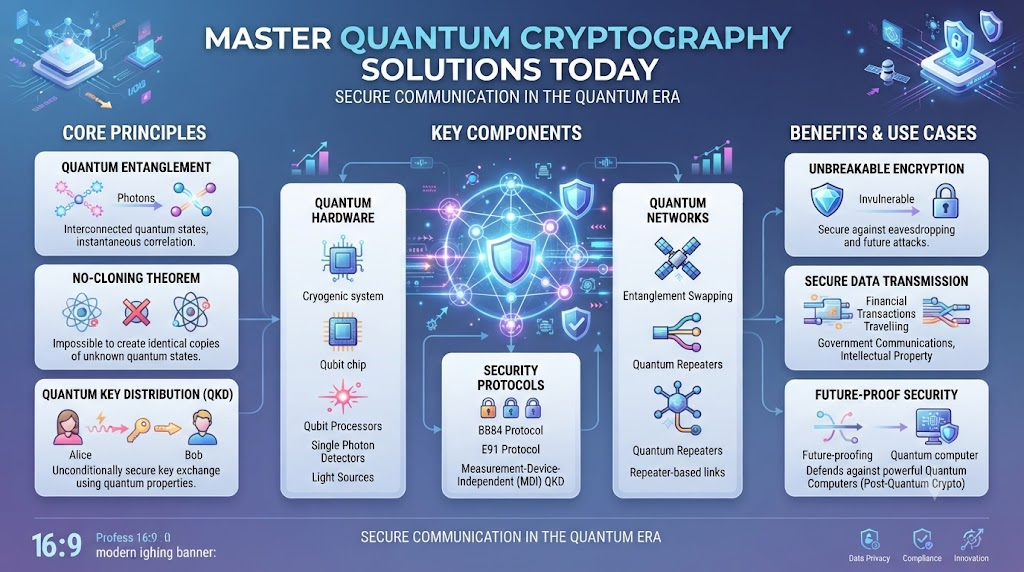
Modern data security relies on complex math puzzles that regular computers cannot break easily. These locks keep our bank accounts, emails, and medical records safe every single day.
Yet a massive shift is coming fast toward our digital infrastructure. You can learn more expert cybersecurity tips directly on QuantumUting.com.
Powerful quantum machines are growing up and getting ready to shatter these old locks. We need new quantum algorithms to build stronger shields before current systems fail completely.
The Core Problem With Old Encryption
Old encryption methods use prime numbers to lock away sensitive files. A standard computer needs thousands of years to guess those hidden prime factors. That long timeline gives us peace of mind when sending private data online.
But quantum computers do not think like regular machines do. They use quantum bits that test millions of options at the very same time. This massive leap in speed changes the rules of the game overnight.
Math puzzles that take centuries to solve will soon fall apart in hours. You must understand this threat to protect your business assets today.
How Shor Algorithm Breaks RSA Locks
A famous researcher named Peter Shor wrote a special step-by-step rule for quantum machines. This specific rule finds hidden factors in large numbers with terrifying speed.
If you run Shor algorithm on a large enough quantum chip, standard RSA encryption breaks down. Your private keys become completely exposed to anyone running the code.
Most modern web traffic relies on these vulnerable keys to stay secure. This looming vulnerability forces security teams to rethink their entire defense strategy from scratch.
Understanding Grover Algorithm and Symmetric Keys
Symmetric keys protect data using shared secrets between two trusted endpoints. You might think these keys are safe from quantum speedups.
Sadly, Grover algorithm offers a different kind of threat to symmetric encryption. It speeds up search tasks by checking multiple database entries in a fraction of the time.
This means attackers can cut your key strength in half using quantum hardware. You must double your key lengths right now to stay safe from this search attack.
The Rise of Post-Quantum Cryptography
Security experts are racing to design new math puzzles that even quantum chips cannot solve. We call this new field post-quantum cryptography.
These algorithms rely on complex lattices and multidimensional math grids. Quantum computers get stuck trying to navigate these massive geometric mazes.
You can run these new security layers on your existing regular computer hardware. This makes the transition smooth and cost-effective for growing organizations.
Why Quantum Key Distribution Changes Everything
Math puzzles can always fail if someone finds a clever shortcut in the future. To fix this, scientists built a hardware-based defense called Quantum Key Distribution.
This method uses actual photons of light to share secret keys between two users. If an eavesdropper tries to look at the light particles, the system changes instantly.
You catch the intruder right away because the data stream leaves a clear physical footprint. This brings an entirely new level of trust to digital communications.
Building Quantum Random Number Generators
Random numbers form the foundation of secure encryption keys everywhere. Regular computers use fake random number generators based on math formulas.
Quantum devices tap into natural physical chaos to generate true random numbers. Because quantum states are completely unpredictable, hackers cannot guess your seed values.
Integrating these generators gives your applications an unbreakable layer of entropy. You stop attackers from predicting your key generation patterns.
Preparing Your Enterprise for the Quantum Shift
Migrating your software stack takes years of careful planning and testing. You cannot wait until quantum computers break your current keys in production.
Start by making an inventory of every certificate and key your systems use today. Look for weak spots where old encryption algorithms protect vital databases.
Upgrade your software libraries to support dual-encryption modes during the transition period. This keeps your legacy systems running while testing new quantum defenses.
Overcoming Performance Bottlenecks in New Cryptography
New post-quantum algorithms often require larger key sizes than older methods. Larger keys mean your network packets get heavier and slower to transmit.
You must optimize your network routing to handle these extra bytes smoothly. Compression tools and faster routing protocols help keep your response times low.
Testing your server load under these new cryptographic strains prevents unexpected crashes later. Performance tuning is a vital part of every successful security upgrade.
Training Your Engineering Teams Today
Your developers need hands-on practice with quantum-safe tools and libraries. Waiting for an emergency leaves your team unprepared for sudden architectural shifts.
Set up internal workshops to explore lattice-based encryption code samples. Encourage your engineers to experiment with open-source quantum security packages.
Knowledge sharing creates a culture of proactive security across your entire organization. Your team becomes your strongest defense against emerging technological threats.
Securing Cloud Infrastructures for Tomorrow
Cloud providers store massive amounts of sensitive enterprise data around the globe. Moving that data to quantum-safe storage requires coordinated vendor support.
Ask your cloud partners about their roadmaps for post-quantum cryptographic integration. Make sure they support flexible key rotation schedules and modern cryptographic agility.
Cloud agility ensures you can swap out broken algorithms without rewriting your entire application. This flexibility saves thousands of engineering hours down the road.
| Feature | Classical Cryptography | Post-Quantum Cryptography |
| Core Math | Prime factorization and discrete logs | Lattices and hash-based structures |
| Hardware Target | Standard CPUs and GPUs | Regular computers and future chips |
| Quantum Threat | High vulnerability to Shor algorithm | High resistance to quantum attacks |
| Adoption Status | Universal deployment today | Active standardization and early rollout |
Real-World Stories and Case Studies
- A major global bank realized their long-term customer archives were vulnerable to store-now-decrypt-later attacks. They audited their entire key inventory and migrated sensitive historical records to lattice-based post-quantum algorithms ahead of schedule.
- A government intelligence agency needed ultra-secure communication channels across remote field offices. They deployed Quantum Key Distribution hardware to instantly detect any physical wiretapping attempts on their fiber optic lines.
- A healthcare provider managed millions of patient DNA records on legacy cloud servers. They upgraded their encryption suites to double-layered keys, protecting sensitive medical data from future quantum decryption threats.
- An e-commerce platform experienced slow checkout speeds after testing early post-quantum security patches. Their engineering team optimized packet headers and reduced key sizes, restoring lightning-fast transaction responses for shoppers.
- A multinational logistics firm relied on insecure random number generators for fleet tracking keys. They integrated quantum random number hardware into their delivery trucks, stopping hackers from predicting vehicle routes.
- A telecommunication carrier faced strict compliance rules regarding long-term data confidentiality. They implemented cryptographic agility frameworks, allowing them to swap vulnerable algorithms without disrupting active customer calls.
- A defense contractor built an isolated internal network using quantum-resistant asymmetric keys. This proactive setup successfully blocked simulated quantum attacks during rigorous red-team penetration testing exercises.
- A software vendor updated their open-source authentication library to support hybrid key exchanges. This update helped thousands of downstream developers secure their mobile apps against upcoming quantum threats.
- A financial exchange upgraded their high-frequency trading servers to handle larger post-quantum packet sizes. They avoided network latency spikes by deploying specialized hardware acceleration modules for matrix math.
- A cloud storage provider launched a zero-knowledge quantum encryption tier for enterprise clients. Businesses rushed to adopt the new service to protect their intellectual property from advanced foreign adversaries.
Common Mistakes and Pitfalls
- Delaying migration until quantum hardware arrives. Problem: Waiting too long leaves your long-term data exposed to retroactive decryption attacks. Solution: Audit your cryptographic assets today and start testing post-quantum replacements immediately.
- Ignoring store-now-decrypt-later threats. Problem: Attackers are harvesting encrypted data today to crack it later using future quantum machines. Solution: Assume all intercepted traffic is being saved and upgrade sensitive archives right now.
- Relying solely on software patches without hardware review. Problem: Old server hardware may choke on the heavy math loads of new lattice algorithms. Solution: Test your hardware limits and upgrade server processors if throughput drops significantly.
- Choosing non-standardized experimental algorithms. Problem: Using custom or unvetted math formulas introduces hidden security flaws into your code. Solution: Stick strictly to official NIST-approved post-quantum cryptographic standards and guidelines.
- Failing to update API contracts during key changes. Problem: Changing key lengths breaks existing client-server communication pipelines abruptly. Solution: Version your API endpoints carefully and support dual-key handshakes during transition windows.
- Neglecting third-party vendor dependencies. Problem: Your internal systems might be secure while your software supply chain remains dangerously vulnerable. Solution: Require all external vendors to provide transparent quantum readiness reports and migration timelines.
- Underestimating key storage space requirements. Problem: Post-quantum keys are much larger and quickly fill up restricted memory pools. Solution: Allocate larger buffer sizes and optimize memory allocation routines across your server clusters.
- Overlooking employee training and skill gaps. Problem: Development teams lack the specialized knowledge required to implement new cryptographic protocols safely. Solution: Invest in regular security training workshops focused on modern cryptographic engineering principles.
- Assuming symmetric encryption needs no changes. Problem: Believing AES-128 is completely safe from quantum attacks leads to painful breaches. Solution: Upgrade all critical symmetric keys to AES-256 to counter Grover algorithm search speeds.
- Skipping thorough penetration testing phases. Problem: Deploying new encryption layers directly to production without testing causes silent system failures. Solution: Run exhaustive simulation tests in a staging environment before releasing updates to users.
Step-by-Step Implementation Roadmap
- Conduct a comprehensive inventory audit of all active encryption keys and certificates across your organization.
- Identify high-risk data assets that require long-term confidentiality against future quantum decryption threats.
- Establish a cross-functional security task force dedicated entirely to post-quantum migration planning.
- Select NIST-approved post-quantum cryptographic algorithms that match your specific application requirements.
- Set up an isolated staging environment to test new lattice-based encryption code libraries.
- Implement dual-key handshake mechanisms to support both legacy and quantum-safe protocols simultaneously.
- Monitor system performance metrics, memory usage, and network latency during heavy load tests.
- Update API documentation and notify third-party partners about upcoming cryptographic changes.
- Begin gradual production rollouts starting with non-critical internal services before touching customer data.
- Monitor live traffic closely, review error logs, and refine your cryptographic agility framework continuously.
Faqs
1. How do quantum algorithms threaten current encryption?
Algorithms like Shor can factor large numbers exponentially faster than regular computers, breaking standard RSA security locks.
2. What is post-quantum cryptography?
It is a new generation of math algorithms designed to resist attacks from both classical and quantum computers.
3. Why are organizations migrating early?
Attackers are harvesting encrypted data today so they can decrypt it later when quantum hardware matures.
4. What is Quantum Key Distribution?
It is a hardware-based method that uses light photons to share secure keys and detect eavesdroppers instantly.
5. Are symmetric keys completely safe?
Symmetric keys like AES face speedup threats from Grover algorithm, requiring upgrades to 256-bit lengths.
6. Do I need special hardware for post-quantum crypto?
Most post-quantum algorithms run smoothly on regular computer hardware, though some benefit from acceleration chips.
7. What makes lattice-based math secure?
Lattices involve complex multidimensional geometric grids that trap quantum computers in endless calculation loops.
8. How long does a cryptographic migration take?
Enterprise migration projects typically take several years of careful planning, testing, and phased rollouts.
9. Can I use dual-encryption during transitions?
Yes, running legacy and quantum-safe keys together ensures smooth compatibility while you upgrade your systems.
10. Where can I find official migration standards?
You can check guidelines published by standards organizations like NIST and explore resources on trusted security sites.
Final Recommendation and Next Steps
Start auditing your current cryptographic keys today to find vulnerable systems. Invest in team training and test NIST-approved post-quantum libraries in your staging environments. Taking proactive steps now keeps your enterprise data safe for the quantum future.
