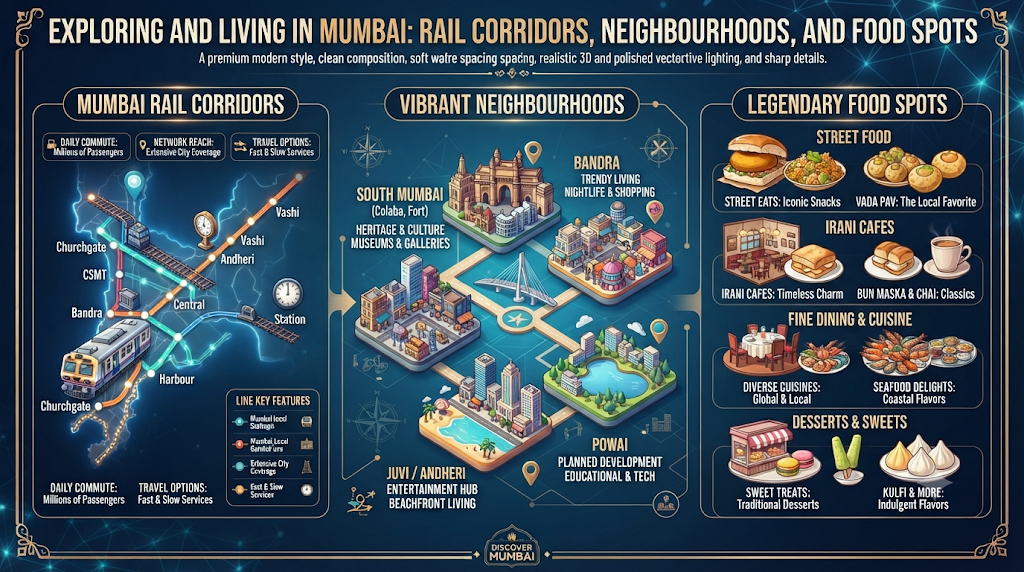
Ask anyone who has lived in Mumbai for more than a month, and they will tell you the same thing: the city rewards people who understand its rhythm. On the surface, crowded footbridges, endless traffic lanes, and unfamiliar station names can feel intense. Beneath that fast pace, however, sits a remarkably logical city built around clear rail spines, self-contained neighbourhoods, and helpful local communities.
Whether you are stepping onto a suburban platform for the first time, comparing rental flats, mapping out a short holiday, or testing a small-business idea, having a clear local roadmap saves hours of trial and error. A practical Mumbai local train guide paired with everyday neighbourhood context lets you move through the city with calm confidence instead of guesswork.
Written from the perspective of a longtime urban observer and local city researcher, this guide covers how Mumbai’s rail and metro corridors work, where newcomers settle, how to plan sightseeing and weekend trips, where to eat and shop, and what small-business owners should check first. Whenever you want local advice or everyday city updates, visit MumbaiOrbit to browse guides and join discussions on the Mumbai community forum.
Understanding Mumbai’s Layout and Commuting Spine
Mumbai sits on a slender coastal peninsula that opens northward into the wider Mumbai Metropolitan Region (MMR). Historic commercial districts, courts, and ports cluster in South Mumbai around Colaba, Fort, and Nariman Point, while residential suburbs and modern office hubs spread north through Dadar, Bandra, Andheri, Borivali, Kurla, Thane, and Navi Mumbai.
Because north–south road corridors bottle up during office hours, rail lines form the true pulse of daily travel. Understanding a few local terms makes transit much clearer:
- Fast vs. Slow Trains: Fast suburban trains skip smaller intermediate stations to cover long distances quickly, while Slow trains stop at every station along the line.
- Major Terminuses: Churchgate anchors the southern end of the Western Line, while Chhatrapati Shivaji Maharaj Terminus (CSMT) anchors the Central and Harbour lines.
- Key Interchange Hubs: Dadar connects Western and Central lines, while Kurla and Wadala Road link Central and Harbour routes.
- Underground & Elevated Metro Links: The Mumbai Metro network adds modern, air-conditioned connections across busy urban stretches, including Mumbai Metro Line 3 (the underground Aqua Line linking Colaba, Cuffe Parade, Bandra-Kurla Complex, and SEEPZ/Andheri).
| Network | Main Corridor | Key Transfer Stations | What Riders Should Keep in Mind |
|---|---|---|---|
| Western Railway Suburban | Churchgate to Virar / Dahanu Road | Dadar, Bandra, Andheri, Borivali | Always verify whether your destination is a Fast stop before boarding. |
| Central Railway Suburban | CSMT to Thane / Kalyan / Kasara / Khopoli | Dadar, Kurla, Ghatkopar, Thane | Check overhead platform indicators early during evening rush hours. |
| Harbour Line Suburban | CSMT to Panvel / Goregaon | Kurla, Wadala Road, Vashi | Read the front destination board carefully, as trains split toward Panvel or Goregaon. |
| Mumbai Metro (incl. Line 3) | Key north–south and east–west urban links | BKC, Andheri, Ghatkopar, Churchgate/CSMT zones | Confirm active stations, operating hours, and QR/smart-card rules on official metro channels. |
Because maintenance blocks and station updates happen regularly, check official announcements from Western Railway, Central Railway, and Mumbai Metro Rail Corporation (MMRC) before setting out.
Six Practical Steps for Navigating Mumbai Public Transport
First-time riders often hesitate at busy station entrances. Breaking your trip into six simple steps keeps public transport straightforward:
- Identify Your Starting Stop: Check the nearest suburban railway station, metro station, or BEST bus stop from your home or hotel.
- Confirm Your Arrival Station: Look up which station sits closest to your workplace, market, or landmark—and note whether you need the East or West exit.
- Match Train Speed to Your Stop: Take a Fast train only if your stop is listed; otherwise board a Slow train or a connected metro line.
- Check Live Service Status: Glance at official railway or metro updates for delays or weekend engineering blocks.
- Buy a Valid Ticket Before Boarding: Purchase single tickets, return tickets, or passes via station counters, ATVMs (Automatic Ticket Vending Machines), or authorized mobile apps.
- Plan Your Last-Mile Connection: Step out on the correct exit side for BEST buses, metered auto-rickshaws (available in the suburbs), or taxis.
Comparing the Best Areas to Live in Mumbai
Choosing among the best areas to live in Mumbai rarely has one universal answer. The right locality depends on where you work, your monthly budget in Indian Rupees (INR), and whether you prioritize lively streets or quieter residential societies.
- Bandra & Santacruz: Favoured by professionals and families seeking vibrant dining, schools, coastal walks, and quick access to Bandra-Kurla Complex (BKC) and the Western Line. Monthly rents sit in the higher bracket.
- Andheri & Powai: Popular with corporate, media, and technology professionals as well as students, offering strong rail, metro, and road connectivity alongside commercial hubs. Road intersections can get congested at peak hours.
- Dadar & Matunga: Well-established central neighbourhoods valued for easy rail access to both South Mumbai and the suburbs, leafy residential pockets, and traditional markets, though apartment sizes are often compact.
- Thane & Navi Mumbai (Vashi, Nerul, Kharghar): Frequently shortlisted by families looking for planned townships, larger housing complexes, parks, and modern infrastructure across the MMR, balanced against longer commutes into South Mumbai.
Smart House-Hunting Habit: Visit any shortlisted apartment during both morning office rush and late evening to check real commute times, water supply hours, mobile signal strength, and housing society rules before paying a deposit.
Sightseeing, Street Food, Shopping, and Weekend Escapes
Mumbai rewards travellers who explore one neighbourhood cluster at a time instead of rushing across the entire map in a single afternoon.
Key Attractions and a Balanced Mumbai 3 Day Itinerary
Popular places to visit in Mumbai span South Mumbai’s heritage buildings, coastal promenades like Marine Drive, Bandra’s seafronts and street lanes, Juhu Beach, museums, and cultural hubs. When building a Mumbai 3 day itinerary, organize each day around one geographic zone:
- Day 1 — South Mumbai Heritage & Waterfront: Explore Fort and Colaba’s historic architecture in the morning, visit a nearby museum or art gallery after lunch, and enjoy the evening sea breeze along Marine Drive.
- Day 2 — Bandra & Western Coastline: Spend the day walking through Bandra’s neighbourhoods, cafes, and waterfront forts, then head toward Juhu for sunset.
- Day 3 — Local Markets & Cultural Life: Browse a vibrant local bazaar in the morning, enjoy a traditional Maharashtrian or regional thali for lunch, and wrap up with a relaxed evening stroll.
Verify weekly closing days, opening hours, and entry fees on official attraction websites before visiting.
Enjoying the Best Street Food in Mumbai and Local Shopping Markets
Sampling the best street food in Mumbai is one of the easiest ways to experience local culture. Everyday favourites—including vada pav, pav bhaji, bhel puri, sev puri, dosa, and freshly brewed cutting chai—appear near railway stations, college zones, and evening khau gallis. Stick to busy stalls with fast turnover where snacks are cooked hot in front of you, and carry sealed drinking water.
When exploring shopping markets in Mumbai, pick the market that matches your list:
- Street Fashion & Footwear: Colaba Causeway, Linking Road (Bandra), and Hill Road offer wide casual selections and lively bargaining.
- Ethnic Wear, Fabrics & Jewellery: Dadar, Kalbadevi, and Bhuleshwar/Zaveri Bazaar cater to traditional attire, textiles, and festive shopping.
- Books & Daily Goods: Fort’s pavement bookstalls and suburban station markets cover everyday household and student essentials.
Easy Weekend Getaways from Mumbai
When you want fresh air outside the city, popular weekend getaways from Mumbai include hill stations such as Lonavala, Khandala, and Matheran, coastal towns like Alibaug, and heritage or nature destinations across Maharashtra. Check highway traffic, ferry or mountain-rail timings, and seasonal advisories on Maharashtra Tourism before travelling.
How to Start a Small Business in Mumbai: Practical Groundwork
Mumbai’s dense population and active consumer market attract small-business owners across food, retail, digital services, and local consulting. Anyone planning how to start a small business in Mumbai should balance ambition with disciplined cost and compliance checks:
- Test Local Customer Demand: Spend time observing footfall, spending habits, and existing competitors in your target lane before locking in space.
- Match Format to Budget: Compare high-street storefronts, cloud kitchens, home-based services, and coworking spaces based on where your customers actually buy.
- Calculate Total Costs in INR: Include commercial security deposits, monthly rent, interiors, utilities, staff salaries, licensing fees, and at least six months of working capital.
- Complete Official Registrations: Check applicable requirements such as Udyam registration for MSMEs, GST registration, Maharashtra Shop and Establishment compliance, and industry-specific licenses (like FSSAI registration for food businesses) through official government portals.
- Respect Local Civic & Society Rules: Verify signage permissions, operating hours, and waste management rules early so daily operations run smoothly.
Everyday Mistakes to Avoid and Connecting on MumbaiOrbit
A few realistic habits keep city life smooth for both residents and visitors:
- Underestimating Rush Hours: Between roughly 8:30 AM–11:00 AM and 5:30 PM–8:30 PM, suburban trains and main roads run packed—always keep extra time for flights, trains, or meetings.
- Relying on Outdated Schedules or Fares: Check official rail, metro, and attraction portals for current timings rather than assuming last year’s details still apply.
- Overlooking Monsoon Conditions: Heavy rain between June and September can slow local trains and hill highways—pack waterproof footwear, an umbrella, and flexible schedules.
Whenever you want to ask practical questions about a transit route, compare residential neighbourhoods, swap food spots, or plan regional travel, visit MumbaiOrbit and join conversations in Ask Mumbai, Trains & Transport, Housing, Khau Galli, and Maharashtra Matters on the Mumbai community forum.
Frequently Asked Questions (FAQs)
1. What is the easiest way to use a Mumbai local train guide for the first time?
Check whether your route runs on the Western, Central, or Harbour line, verify if your destination station is a Fast or Slow stop, buy a valid ticket before entering the platform, and travel outside peak rush hours when possible.
2. Which places to visit in Mumbai are closest to each other for a short walk?
Landmarks in South Mumbai around Fort, Colaba, Kala Ghoda, and Marine Drive sit within a compact area, making them easy to explore together without long cab rides.
3. What are popular weekend getaways from Mumbai within a few hours’ travel?
Lonavala, Khandala, Matheran, and Alibaug are well-known weekend options in Maharashtra offering hill views, walking trails, or coastal beaches.
4. What matters most when choosing among the best areas to live in Mumbai?
Focus on door-to-door commute time to your workplace or college, monthly rent in INR, access to suburban rail or metro stations, and nearby groceries, clinics, and schools.
5. How does Mumbai Metro Line 3 improve city travel?
Mumbai Metro Line 3 provides an underground rail connection linking South Mumbai business districts, Bandra-Kurla Complex (BKC), and the western suburbs; check MMRC’s official website for active stations and schedules.
6. How should first-time visitors structure a Mumbai 3 day itinerary?
Dedicate Day 1 to South Mumbai heritage and Marine Drive, Day 2 to Bandra and Juhu, and Day 3 to local markets, museums, and regional food.
7. How can visitors choose safe spots for the best street food in Mumbai?
Look for popular stalls with rapid customer turnover where dishes are cooked fresh and served hot, and drink sealed bottled water.
8. Which shopping markets in Mumbai are best known for clothing and bargains?
Colaba Causeway in South Mumbai and Linking Road and Hill Road in Bandra are popular spots for casual clothing, footwear, and accessories.
9. What registrations should entrepreneurs check when learning how to start a small business in Mumbai?
Review Udyam registration, GST registration, Maharashtra Shop and Establishment rules, and sector-specific approvals (such as FSSAI for food businesses) on official government portals.
10. How can newcomers ask local questions on a Mumbai community forum?
Visit MumbaiOrbit to read local city guides and participate in community discussions covering transport, housing, food, and Maharashtra travel.
Conclusion
Mumbai feels much smaller and friendlier once you understand how its rail corridors, metro links, neighbourhoods, and local markets fit together. Whether you are visiting for three days, settling into a new apartment, planning a weekend break, or launching a small business, practical local planning turns daily friction into smooth routines.
Pick one route, neighbourhood, or market you want to explore next, verify current timings on official portals, and visit MumbaiOrbit to read city guides and join helpful conversations on the Mumbai community forum.
