Imagine a giant water network that brings clean water to every home in a busy city. If a pipe breaks or the water becomes dirty, everyone faces a big problem. In the digital world, information flows just like water through special paths called data pipelines.
Companies rely on this information every single day to build apps, help doctors treat patients, and help stores stock the right toys. However, these information streams often break, slow down, or carry messy records.
DataOps is a friendly, organized way of working that helps software engineers, analytics teams, and operations specialists build reliable information pipelines. Educational platforms like TheDataOps.org help people discover how these teams collaborate using smart automation and clear communication to deliver trusted information every day.
What Is DataOps and Why Do Teams Use It
DataOps stands for Data Operations. It combines the best ideas from agile teamwork, software development methods, and factory assembly lines.
Long ago, making a car took weeks because one person built each piece by hand. Then, factories introduced assembly lines where machines and people checked each part step by step. DataOps creates that same reliable assembly line for digital facts and numbers.
The Core Idea Behind Data Operations
At its heart, DataOps treats information workflows like living software products. In the past, data teams worked in separate rooms and rarely talked to one another.
A data analyst might ask for a report, but the database team took three months to prepare it. By the time the report arrived, the information was old and useless.
DataOps removes these walls. It encourages data engineers, data scientists, and business leaders to talk daily, share goals, and use automated systems to deliver fresh records quickly.
A Practical Kitchen Example
Think of DataOps like a busy restaurant kitchen during dinner time. If the vegetable choppers do not talk to the soup chefs, the soup ends up without carrots.
If nobody tastes the broth before serving it to guests, customers receive cold or salty meals.
In this kitchen:
- The ingredients represent incoming raw facts.
- The kitchen recipes represent automated transformation code.
- The head chef acts as the DataOps Engineer making sure every station works together.
- The taste-tester represents automated quality checks that catch mistakes before meals leave the kitchen.
When the kitchen runs smoothly, hungry guests get delicious meals on time. DataOps provides that exact harmony for companies handling millions of numbers every minute.
Key Building Blocks of Data Operations
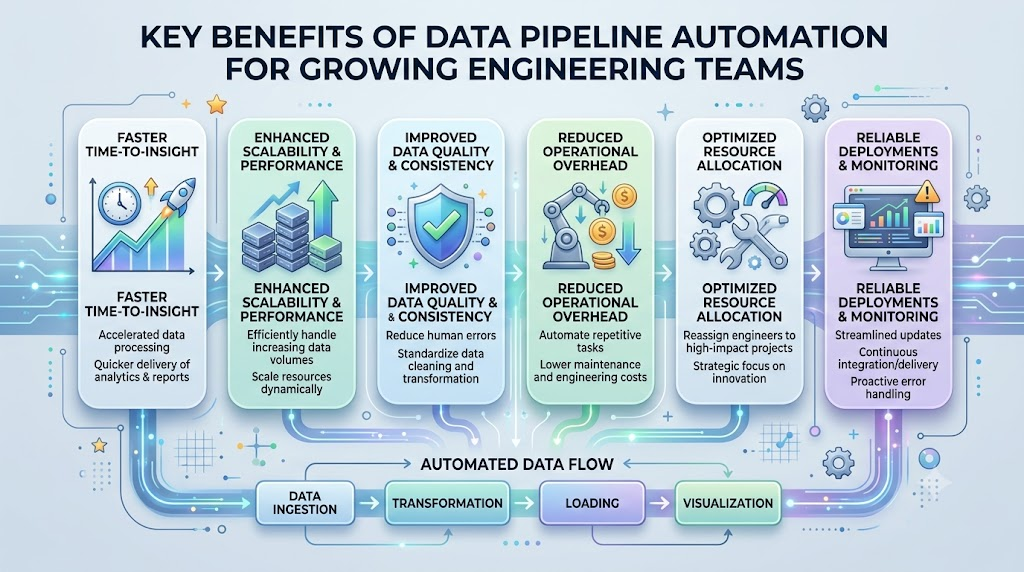
To build a reliable information assembly line, teams use specific building blocks that protect against mistakes.
| Building Block | What It Does | Why It Helps the Team |
| Data Pipeline Automation | Runs data tasks automatically on a schedule | Removes slow, boring manual work and stops human error |
| Continuous Integration | Tests new pipeline code every time a change occurs | Catches programming bugs before they break real systems |
| Data Quality Management | Scans information to ensure values are complete and accurate | Prevents incorrect reports from reaching decision-makers |
| Data Observability | Watches the health, freshness, and speed of pipelines | Alerts engineers the moment an unexpected delay happens |
| Environment Management | Creates safe sandbox areas for testing code | Keeps live production systems completely safe from accidents |
Automated Testing and Quality Checks
When engineers write software, they run small tests to verify their code works. DataOps takes that clever idea and applies it to incoming facts.
As information travels from phones, cash registers, or website clicks, automated robots inspect it. These checks ensure phone numbers have enough digits, prices are positive numbers, and dates make sense.
If something looks wrong, the system pauses that specific batch and sends a friendly warning message to the engineering team.
Watching Pipelines with Full Visibility
Pipelines can slow down just like highway traffic during a holiday weekend. Without proper monitoring tools, nobody notices the jam until angry managers ask why their morning charts are empty.
DataOps uses observability tools to track five key signals:
- Freshness: Is the information arriving on schedule?
- Distribution: Do the values fall within normal ranges?
- Volume: Did we receive ten thousand records or only ten?
- Schema: Did someone change a column name without telling us?
- Lineage: Where did this record start, and where does it go next?
By tracking these signals, teams fix small glitches before anyone outside the room even notices.
Popular Tools That Power Data Operations
Specialized programs make these modern workflows possible. Teams mix and match these tools to create a comfortable work environment.
Orchestration and Stream Processing
Orchestration engines act like school bus drivers who know every stop on the morning route. Apache Airflow is a popular open-source tool that schedules tasks and makes sure step two never starts until step one finishes cleanly.
When teams need to move streaming facts instantly, they use systems like Apache Kafka. Kafka acts like a super-fast conveyor belt carrying messages between applications.
For heavy computing jobs, frameworks like Apache Spark crunch massive datasets across many computers running together in harmony.
Containers and Monitoring Dashboards
Modern teams package their pipeline code into tidy containers using Kubernetes. Containers ensure an application runs identically on a laptop, a testing server, or a massive cloud computer.
To monitor these environments, engineers link their pipelines to Grafana dashboards. Grafana displays colorful gauges and graphs that show pipeline health at a glance.
Teams often review these technologies through structured DataOps Tools tutorials to understand how each piece connects to the larger puzzle.
Practical Applications in the Real World
DataOps is not just a neat theory. Real organizations rely on it every day to solve tough operational headaches.
Helping Hospitals Care for Patients
Hospitals collect patient records from heart rate monitors, lab results, and pharmacy orders. Doctors need these updates right away to choose the best treatments.
With modern pipelines, patient information flows securely into analysis dashboards within seconds. Quality checks ensure that medication dosages never get mixed up in transit, protecting patient health around the clock.
Stopping Online Banking Fraud
Banks process millions of card swipes every hour. Fraud detection systems must analyze every transaction within milliseconds to spot stolen cards.
Using stream processing and automated deployment rules, bank engineers safely update fraud-catching rules without taking banking apps offline.
If a bad actor tries to use a stolen card across the world, the pipeline flags the event instantly and keeps customers safe.
Common Challenges and How Teams Overcome Them
Adopting new operational habits takes patience, practice, and teamwork. Organizations often encounter a few common hurdles along the way.
Incoming Data ──> Automated Tests ──> Pipeline Transformation ──> Quality Check ──> Business Reports
                          │                                            │
                    (Fails Test)                                 (Fails Check)
                          │                                            │
                          └───> Alert Sent to DataOps Engineer <───────┘
- Breaking Down Siloed Habits: Departments often guard their information jealously. Overcoming this requires friendly leadership, open communication, and shared team goals.
- Too Many Messy Legacy Tools: Old databases often resist automation. Teams overcome this by upgrading components gradually instead of trying to replace everything in a single weekend.
- Skill Gaps Across the Team: Learning automated testing and cloud infrastructure takes dedicated time. Many technical professionals explore a structured DataOps Course to build strong hands-on habits.
- Lack of Consistent Standards: Without clear rules, different developers write code in conflicting styles. Creating clear testing guidelines keeps all pipelines clean and easy to maintain.
Starting Your Journey as a Data Professional
Because every modern organization handles massive amounts of records, skilled specialists are in high demand across the globe.
Essential Skills for Aspiring Engineers
A successful DataOps Engineer combines multiple talents:
- Writing clear scripts using languages like Python.
- Building automated tests that catch bad records early.
- Setting up version control systems to track code edits safely.
- Understanding cloud services and distributed compute engines.
- Communicating clearly with teammates who do not have technical backgrounds.
Learning Paths and Professional Growth
If you want to enter this exciting field, building a clear learning habit is the best first step. Many professionals seek out comprehensive DataOps Training to learn how automation, version control, and data hygiene fit together.
As your knowledge deepens, pursuing a formal DataOps Certification helps validate your practical understanding of automated pipelines. Organizations also hire specialized DataOps Consulting experts to help modernize legacy data setups.
Learners can find structured tutorials, tool comparisons, and community guidance on platforms like TheDataOps.org to support their educational goals step by step.
Frequently Asked Questions
What is DataOps in simple words?
DataOps is a team-based practice that uses automation, testing, and monitoring to deliver accurate information quickly and safely to the people who need it.
How does DataOps differ from traditional DevOps?
DevOps focuses on building, testing, and delivering software code, while DataOps focuses on delivering both code and the actual information that flows through that code.
Why is automated data testing so important?
Automated testing catches incorrect numbers, missing fields, and broken files early so that business leaders never make big decisions based on bad records.
What tools should a beginner explore first?
Beginners can start by learning Python for scripting, Git for saving code changes, and basic workflow tools like Apache Airflow to practice scheduling simple tasks.
Can small companies benefit from a DataOps Platform?
Yes, even small teams save hours of stressful manual debugging by using automated pipelines and simple monitoring tools from the very beginning.
Final Thoughts
Data touches almost everything we do, from ordering groceries on a smartphone to researching new medical discoveries. When data pipelines break, work stalls, decisions get delayed, and people lose trust in their digital tools.
Adopting smart DataOps practices turns fragile, unpredictable data workflows into smooth, reliable assembly lines. By combining automated testing, clear pipeline observability, and friendly collaboration, modern organizations can deliver fresh insights safely every single day.
Whether you are an aspiring student, a software developer, or an experienced team lead, exploring educational materials on TheDataOps.org can guide your path toward building faster, safer, and more dependable information systems for the future.
