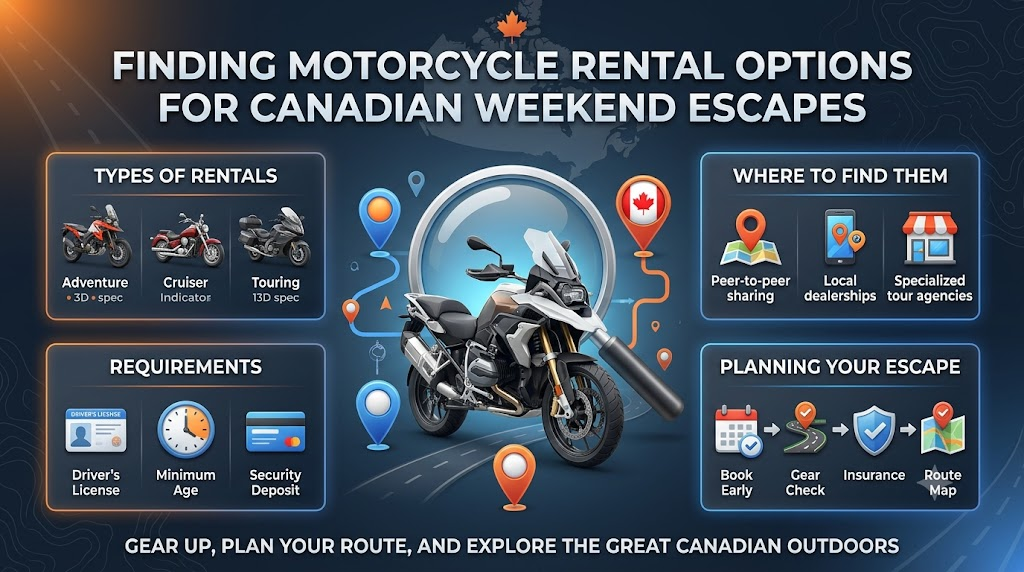
Introduction
Canada features some of the widest open highways in the entire world. You can plan your official trips and view official maps through Destination Canada. Smooth pavement cuts through quiet green pine forests for thousands of miles. Dramatic mountain peaks rise directly into crisp blue skies. Clean lakes sparkle beside winding two-lane roads. Traveling across these lands brings pure freedom. Every road trip starts with one main choice. You must pick the right vehicle for your journey.
A motorcycle lets you smell the cedar trees in the morning. An SUV keeps your family warm during sudden rainstorms. MotoShare helps travelers find verified local vehicles across Canada. Our platform connects you with trusted hosts in major cities. We make it simple to compare prices and styles. You get reliable wheels to explore the great outdoors.
Your dream Canadian road journey starts right here. Let us explore the best routes and vehicles together.
Why Rent a Motorcycle in Canada?
Riding across Canada gives you a deep connection to nature. You do not just see the landscape through glass. You feel the cool mountain breeze on your arms. Every turn brings fresh scents of pine needles and damp earth.
The wide highways offer sweeping turns and dramatic switchbacks. Mountain routes like the Icefields Parkway feature tall granite walls. You can stop easily at scenic pullouts to watch wildlife. Always keep a safe distance from big animals like bears and elk.
You must match your bike to the unique Canadian climate. Summer riding conditions can change very fast. A warm morning can turn into a chilly, damp afternoon. Choosing the right motorcycle class keeps you steady and safe.
A motorcycle rental Canada trip requires proper power and weather protection. Lightweight commuter bikes struggle on fast multi-lane freeways. Strong touring models block wind and reduce driver fatigue. Smart riders pick comfortable machines for these long journeys.
Choosing Your Ride: Cruisers, Touring Bikes, and Cars
Selecting the best ride depends on your travel distance and personal comfort. Canada covers massive land areas between major stops. You need a vehicle that supports your body for hours.
A small city bike works well for quick afternoon jaunts. Big touring bikes conquer long highway stretches with heavy gear. Adventure models handle gravel detours with tall clearance. Cars protect you when bad weather rolls over the mountains.
| Vehicle Type | Best Use | Rider Skill Needed | Luggage Space | Road Comfort |
| City Commuter Bike | Downtown streets and short trips | Novice to Intermediate | Small rear bag | Fair for short rides |
| Touring Cruiser | Long highway cruising | Intermediate | Hard locking saddlebags | High with backrests |
| Adventure Motorcycle | Mixed pavement and gravel | Intermediate to Advanced | Large side panniers | High upright seating |
| Rental Car / SUV | Family trips and bad weather | Standard Car License | Full enclosed trunk | Maximum in any weather |
Highway wind can wear you down after three hundred kilometers. Large windshields and fairings deflect the cold breeze over your helmet. A solid trunk keeps all your clothes dry and secure.
Pick a vehicle that matches your practical riding skill. Heavy touring bikes feel great at speed but require care when parking. Modern SUVs give you complete peace of mind in heavy downpours.
Motorcycle Rental Toronto and Motorcycle Rental Calgary
Toronto and Calgary present two completely different riding environments. Each city opens the door to unique regional adventures. Your choice depends on whether you prefer big lakes or towering peaks.
Booking a motorcycle rental Toronto puts you near Lake Ontario. Southern Ontario features busy highways with heavy transport truck traffic. Routes like Highway 401 demand high focus from every rider. Once you leave the city, rolling farm country and quiet lake towns welcome you.
A motorcycle rental Calgary leads you straight toward the Rocky Mountains. The city sits on wide, open prairie flatlands. Strong crosswinds can push your bike as you head west. Within an hour, massive snow-capped mountains fill your visor.
Toronto riders enjoy smooth paved roads through historic wine regions. Calgary riders face steep mountain grades and sudden gravel patches. Both regions offer incredible trips if you prepare for the terrain.
Plan your fuel stops carefully when leaving Calgary for the mountains. Gas stations grow scarce once you enter remote provincial parks. In Ontario, watch for sudden traffic slowdowns around major urban interchanges.
Motorcycle Rental Vancouver and Scenic Coastal Rides
The West Coast of Canada offers lush temperate rainforests and ocean air. Coastal temperatures stay mild through most of the riding season. Mild weather makes British Columbia an absolute paradise for two wheels.
Starting with a motorcycle rental Vancouver lets you explore coastal routes. You can ride along the famous Sea-to-Sky Highway toward Whistler. This world-famous road hugs deep ocean fjords before climbing tall mountains. Smooth asphalt and sweeping curves make it a rider favorite.
It is easy to rent a motorcycle in Canada for coastal exploration. You can roll your bike right onto a ferry toward Vancouver Island. The island features quiet secondary roads with very light car traffic. Giant Douglas fir trees line the asphalt and shade the road.
Watch out for damp moss and wet tree needles on shaded corners. Coastal rain showers can pop up without any advance warning. Good tires with deep tread will keep you firmly planted on wet roads.
Summer months bring dry roads and long sunny daylight hours. Always stop at scenic ocean viewpoints to catch sight of passing killer whales. Vancouver riding combines urban culture with raw coastal wilderness.
Adventure Motorcycle Rental Canada
Adventure motorcycles blend highway touring with rough off-road capability. They feature tall suspension travel to soak up deep potholes. Large front wheels roll over loose rocks and dirt with ease. Upright seating gives you great visibility over passing traffic.
Securing an adventure motorcycle rental Canada allows you to leave the pavement behind. You can explore old logging roads across British Columbia and Alberta. These sturdy bikes carry heavy camping gear into remote wilderness areas.
You must stay alert for sudden elevation changes in the high country. Temperatures can plunge ten degrees within a single mountain climb. Warm valley air quickly turns into biting cold near glacier summits.
Wildlife awareness is vital when riding through remote backroads. Bears, cougars, and moose live along these quiet gravel corridors. Never keep open food in your soft motorcycle bags overnight.
Dual-sport tires handle hard-packed dirt and slick pavement equally well. Modern traction control systems help keep you safe on loose gravel. An adventure bike gives you total freedom to choose any path.
Pre-Ride Vehicle Inspection Checklist
Never jump on a rental machine without doing a full inspection first. A small mechanical issue can ruin a great vacation day. Taking ten minutes to check key items keeps you safe on the highway.
Walk around the vehicle in bright daylight with your phone camera. Take clear photos of every minor scrape, chip, or scratch. This quick habit protects your deposit when you return the machine.
| Check Point | What to Look For | Why It Matters |
| Tires & Tread Depth | Deep rubber grooves and proper air pressure | Ensures grip on wet mountain curves |
| Front & Rear Brakes | Firm levers and thick brake pads | Stops heavy bikes safely on downhill grades |
| Headlight & Turn Signals | Bright bulbs and clean plastic lenses | Keeps you visible to oncoming logging trucks |
| Engine Oil & Fluid Levels | Clean fluid between the high and low marks | Prevents sudden engine damage on remote roads |
| Provincial Registration & Insurance Papers | Current dates matching the vehicle plate | Proves legal operation during roadside checks |
| Mirrors & Throttle Cable | Clear rear view and smooth snap-back action | Allows quick reactions in heavy highway traffic |
Check the operation of all control switches before rolling out. Ensure the side stand cuts the engine when clicked into gear. Confirm that your host explains any unusual starting quirks or fuel cap releases.
Ask where the physical registration papers are stored on the bike. Most hosts tuck these papers beneath the locking passenger seat. Having clean paperwork ready saves time during routine provincial highway checks.
Motorcycle Road Trip Canada and Seasonal Route Planning
A successful motorcycle road trip Canada requires smart seasonal timing. The prime riding window runs strictly from June through late September. Spring arrives late in northern areas, leaving gravel and salt on the shoulders.
Mountain passes can see sudden freezing temperatures even in mid-summer. A warm sunny day in Banff can feature icy slush at high elevations. Layer your clothing so you can adapt quickly as the elevation climbs.
Plan for regular rest breaks every two hours of continuous riding. Canada’s sheer size causes rider fatigue faster than you might think. Long, straight prairie roads demand steady mental focus to stay alert.
Book your national park vehicle passes online before you depart. Parks like Jasper and Banff require valid permits displayed on your windshield. Buying early lets you bypass long lines at the highway entrance gates.
Keep your daily riding distance under four hundred kilometers per day. This leaves plenty of time for hot meals, trail walks, and photographs. Rushing through vast landscapes ruins the true spirit of the Canadian road.
Car Rental Canada and Car Rental Toronto
Renting a car makes perfect sense for many traveling groups. Four doors and a closed cabin provide comfort that two wheels cannot match. Enclosed vehicles keep you warm during early spring and late autumn road trips.
Choosing a car rental Canada lets you haul heavy family luggage easily. You can pack bulky hiking boots, warm parkas, and camping gear without stress. Everyone stays dry and cozy when heavy rain rolls across the highway.
Booking a car rental Toronto allows you to navigate regional weather shifts safely. Modern cars feature anti-lock brakes and all-wheel drive for superior traction. You can drive through sudden summer thunderstorms with total peace of mind.
Cars also allow you to share driving duties among adult passengers. Trading off behind the wheel prevents driver exhaustion on long prairie crossings. Children can nap comfortably in the back seat between national park stops.
Sedans and SUVs offer secure locking trunks for your expensive electronics. You can leave laptops and camera bags inside while hiking to remote waterfalls. A dependable car provides simple, practical travel for any large group.
Finding Local Rides and Booking Through MotoShare
MotoShare offers a modern way to rent vehicles across Canada. Our platform connects traveling drivers with local hosts who love cars and bikes. We operate in major cities across several Canadian provinces.
Finding a motorcycle rental near me is quick and easy on our site. You can filter vehicles by engine size, seat height, and location. Our clear listings show detailed photos and complete mechanical specifications.
We believe in honest pricing with no hidden checkout surprises. Every listing displays transparent daily rates in Canadian Dollars (CAD). You know the exact cost before you confirm your reservation.
Local hosts share helpful regional riding tips that guidebooks miss. They can recommend the best quiet secondary highways and local bakeries. You get personal service along with a well-maintained vehicle.
Booking takes only a few minutes through our secure digital portal. Upload your driver’s credentials and verify your identity in advance. MotoShare helps you hit the open road with total confidence.
Real-Life Travel Scenarios
- A local rider books a comfortable cruiser for a sunny summer weekend in Toronto. They ride east toward the vineyards of Prince Edward County. The relaxed seating position keeps their back happy on quiet rural backroads.
- An adventure rider rents a capable 750cc dual-sport motorcycle right in Calgary. They ride straight into the Rocky Mountains along the scenic Icefields Parkway toward Jasper. The tall suspension absorbs rough construction patches on remote mountain passes.
- A visiting European tourist lands at the airport in Vancouver for a two-week trip. They rent a nimble sports tourer to ride the winding Pacific Rim Highway toward Tofino. Cool ocean air and ancient cedar trees make every mile unforgettable.
- A traveling family books a spacious all-wheel-drive SUV in downtown Montreal. They drive north through the rolling hills and quiet lakes of the Laurentian Mountains. The large trunk holds all their heavy camping gear and warm clothing easily.
Common Mistakes to Avoid When Renting Vehicles in Canada
- Underestimating massive highway distances between rural fuel stops can leave you stranded. Fuel stations can sit more than one hundred kilometers apart in remote areas. Fill your tank whenever the gauge drops to half.
- Forgetting that high mountain passes can freeze even during warm July afternoons. Cold air drains your body heat and slows down your physical reaction time. Always carry thermal base layers inside your travel luggage.
- Failing to verify that your motorcycle license has a full, unrestricted endorsement. Canadian rental hosts cannot accept learner permits like an Ontario M1 or BC 6L. Make sure your home license allows solo highway riding.
- Riding at dusk or dawn through wooded highway corridors is extremely risky. Large animals like deer and moose feed near road shoulders during these twilight hours. Park your vehicle safely before the sun goes down completely.
- Skipping personal layers and failing to pack dedicated waterproof rain gear. Summer thunderstorms in Canada drop heavy rain and hail within minutes. Pack a dedicated rain jacket and pants at the top of your bag.
- Renting a massive heavyweight cruiser without prior experience handling strong crosswinds. Prairie gusts can blow your bike sideways across the painted lane lines. Choose a lighter, familiar machine if you lack heavy highway experience.
- Not checking whether national park passes are mandatory for your planned scenic route. Driving through Banff or Jasper requires an active park pass on your dash. Buy your pass online to avoid fines from park wardens.
- Relying exclusively on mobile cellular data in deep mountain valleys and remote forests. Cellular coverage vanishes completely between major towns in the Canadian wilderness. Download offline navigation maps to your smartphone before leaving your hotel.
Simple Rental Booking Checklist
- Valid unrestricted motorcycle license from your home province, territory, or home country. (Verify that you hold a full class without any learner restrictions).
- Major credit card for the security deposit pre-authorization hold. (Ensure your card has enough available credit limit to cover the security deposit).
- Proof of valid insurance coverage with clear terms regarding deductible amounts. (Review what third-party liability and physical damage coverages are included).
- Certified motorcycle helmet with valid DOT or ECE safety approval marks. (Check that the helmet fits snugly and has an unblemished eye visor).
- Fuel return policy confirmation and scheduled return drop-off time. (Return the vehicle with a full tank of fuel to avoid extra service fees).
Frequently Asked Questions
1. Can international visitors rent a motorcycle in Canada using their foreign driver’s license?
Yes, international travelers can rent vehicles across Canada with a valid foreign license. Your license must have a full motorcycle endorsement from your home country. It must remain fully valid for the entire duration of your trip.
If your license is not written in English or French, get an International Driving Permit. This permit translates your original credentials for local police officers. Always carry both your original national license and your valid passport while driving.
2. What months are best for planning a motorcycle road trip across Canada?
The prime riding season across Canada runs from June through late September. July and August deliver the warmest weather and the lowest chance of freezing mountain roads. Southern coastal areas like Vancouver often allow comfortable riding through October.
Early spring brings melting snow and leftover road salt that harms motorcycle metal parts. Winter weather arrives quickly in the mountains by mid-October. Planning your long road journey for mid-summer provides the best conditions.
3. Are motorcycle helmets legally required in every Canadian province?
Yes, wearing a protective motorcycle helmet is mandatory by law in every Canadian province. You cannot ride anywhere in Canada without wearing an approved helmet securely strapped. Police issue heavy fines to any rider who violates this safety law.
Your helmet must meet recognized safety standards like DOT, ECE, or Snell ratings. Look for the official certification sticker placed on the lower rear shell. Full-face helmets offer the best protection against flying bugs and loose road gravel.
4. What type of insurance is mandatory when renting a motorcycle or car in Canada?
Canadian law requires valid third-party liability insurance on every motorized road vehicle. This mandatory coverage pays for injuries or property damage caused to other people. Rental platforms include this baseline legal coverage within their bookings.
You should also check the collision and comprehensive damage policies. These coverages protect the vehicle against theft, hail, fire, or accidental crashes. Make sure you understand the exact deductible amount required before you take the keys.
5. Can beginner riders rent high-powered sport or touring bikes?
Most rental hosts require riders to hold a full, unrestricted motorcycle license. Hosts often set minimum age requirements of twenty-one or twenty-five years old. They may also ask for proof of recent riding experience on large bikes.
Beginners with learner permits like an Ontario M1 or BC Class 6L cannot rent. High-powered machines demand smooth throttle control and confident balance at highway speeds. We suggest starting on a mid-sized machine that matches your skill level.
6. How does MotoShare help riders find a reliable motorcycle rental near me?
MotoShare features an easy location-based search map on its digital marketplace platform. You can type in your current city or airport to view available local rides. The search tool instantly displays nearby cruisers, sport tourers, adventure bikes, and passenger cars.
You can filter results by daily rental price, engine size, and included luggage gear. Every listing features verified photos and genuine reviews from other road travelers. This makes finding a safe, dependable machine in your immediate area very simple.
7. Are one-way rentals possible between major Canadian cities like Calgary and Vancouver?
Some commercial rental companies offer one-way trips between major Canadian travel hubs. However, peer-to-peer hosts usually require you to return the vehicle to the starting city. One-way rentals often include an extra drop-off fee to cover transport costs.
If you plan to ride between Calgary and Vancouver, ask your host in advance. Many travelers prefer to design scenic loop routes that start and finish together. A loop route allows you to explore different mountain highways on the return trip.
8. Do Canadian rental motorcycles include roadside assistance for remote highway breakdowns?
Many rental operators and booking platforms offer optional roadside assistance packages during checkout. This service covers emergency towing, dead battery jumps, and flat tire help along major routes. You should always confirm whether roadside coverage is included in your daily rate.
Cellular phone service drops along remote stretches of highway in northern regions. Even with roadside assistance, always carry a small tire repair kit and basic tools. Being self-reliant is smart when exploring vast Canadian wilderness roads.
9. What should riders pack to handle rapid mountain weather changes?
Pack a smart layering system that adapts quickly to shifting mountain temperatures. Start with a breathable base layer that pulls sweat away from your skin. Add a fleece or insulated mid-layer to trap heat inside your jacket.
Always carry a dedicated windproof and waterproof outer riding jacket and rain pants. Pack two pairs of riding gloves, including one warm, waterproof winter pair. Cold, wet hands make it difficult to squeeze your brake lever safely.
10. Can I rent a car instead of a motorcycle on MotoShare if the weather turns cold?
Yes, MotoShare lists both passenger cars and motorcycles on its Canadian rental marketplace. If late-season snow makes motorcycle travel unsafe, you can browse available rental cars. An all-wheel-drive SUV keeps your travel plans moving forward safely.
Switching to a car gives you full heating, heated seats, and protected trunk space. You can still admire the magnificent Canadian landscapes without freezing in the saddle. It provides a comfortable backup option when unseasonal mountain storms blow in.
11. What security deposit amounts do Canadian rental hosts typically hold?
Security deposit amounts vary depending on the vehicle class, value, and insurance policy. Standard commuter bikes and economy cars usually require a hold between 500 and 1,000 CAD. High-end adventure bikes and touring cruisers may require a hold of 1,500 to 2,500 CAD.
Hosts place this pre-authorization hold on your major credit card during vehicle pickup. The funds are held temporarily to cover potential fuel charges, traffic fines, or damage. The hold releases back to your card once you return the undamaged vehicle.
12. Why should travelers book through a specialized Canadian rental marketplace?
Specialized platforms connect you with verified local hosts who understand local Canadian roads. You get access to well-maintained vehicles that are properly insured for provincial travel. Our transparent pricing displays clear rates in Canadian Dollars without surprise conversion fees.
Booking through a marketplace gives you dedicated customer support if plans suddenly shift. You also gain helpful local advice on the best driving routes and scenic detours. It provides an easy, trustworthy way to experience the best roads across Canada.
Conclusion
A Canadian road trip delivers some of the most spectacular travel memories on Earth. Matching your vehicle to your chosen route ensures a safe and comfortable adventure. Pick a nimble motorcycle for summer mountain passes or a strong SUV for family comfort. Always monitor the shifting regional weather, dress in warm layers, and respect local wildlife along the highway. Take your time to enjoy the journey, stop at quiet scenic lakes, and savor the open road. Start browsing MotoShare today to find your ideal ride and experience the true majesty of Canada.
