INTRODUCTION
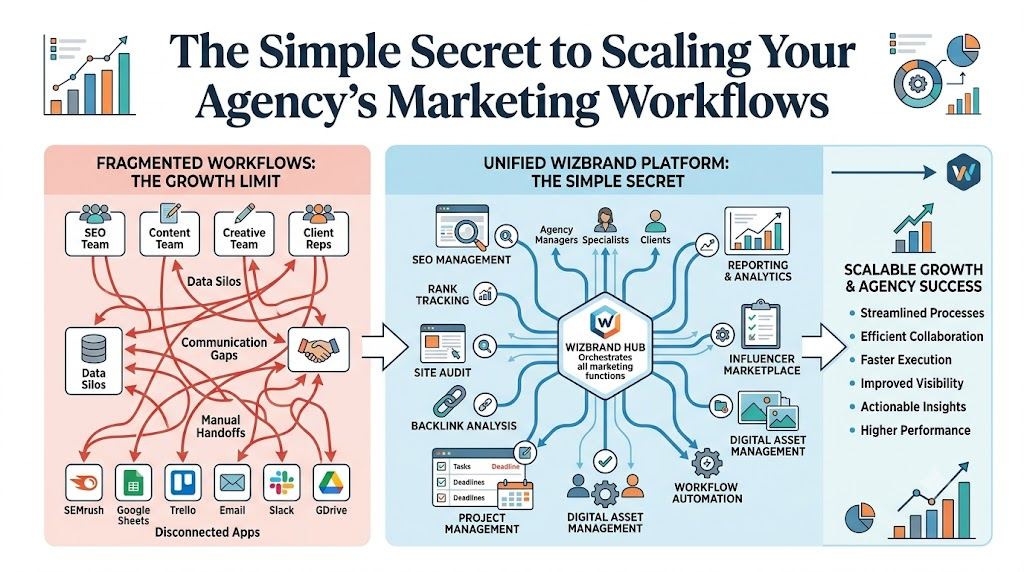
The modern digital ecosystem demands speed, accuracy, and operational agility. Yet, many organizations struggle with fragmented marketing setups—relying on a patchwork of disconnected applications for keyword intelligence, link auditing, project tracking, asset distribution, and campaign coordination. This operational clutter creates data silos, escalates subscription overhead, and stalls execution speed. When strategic indicators are scattered across multiple dashboards, measuring cross-channel performance shifts from a data-driven process into an imprecise guessing game. To overcome these roadblocks, high-performing enterprises and marketing agencies are adopting unified operating environments. Integrating your core operations into a centralized, all-in-one digital marketing platform establishes a single source of truth across campaign lifecycles, technical optimization, brand asset management, and performance analytics. Automating manual hand-offs and centralizing communication allows teams to eliminate process friction and make faster, commercially impactful decisions.
WHAT IS AN ALL-IN-ONE DIGITAL MARKETING PLATFORM?
Definition
An all-in-one digital marketing platform is an integrated software ecosystem engineered to plan, execute, monitor, and optimize multi-channel growth campaigns from a single operational console. Rather than deploying disconnected niche applications, organizations leverage a unified solution to control their full digital strategy.
+--------------------------------------------------------------------+
|               UNIFIED MARKETING PLATFORM ARCHITECTURE              |
+--------------------------------------------------------------------+
|  [Central Operating System]                                        |
|     |-- Organic Search (Keywords, Audits, Backlinks)               |
|     |-- Workflow Management (Task Boards, Approval Paths)          |
|     |-- Digital Assets (Central Storage, Version Rules)            |
|     |-- Partner Channels (Influencers, Media Network)              |
|     |-- Consolidated Analytics (Cross-Channel Performance Views)   |
+--------------------------------------------------------------------+
Core Components
A full-stack marketing system unifies critical operational capabilities:
- Organic Search Governance: Advanced tools for rank tracking, site crawl analysis, and link network monitoring.
- Workflow & Task Orchestration: Structured project environments, custom approval paths, and team accountability modules.
- Digital Asset Management (DAM): Centralized cloud media vaults with strict permissions and file versioning.
- Partner & Outreach Hubs: Direct creator discovery and campaign execution portals.
- Cross-Channel Analytics Engine: Automated reporting consoles that translate raw operational metrics into actionable business intelligence.
Why Businesses Need One
As digital operations expand, managing standalone tools creates significant administrative friction. Teams waste valuable hours transferring data across spreadsheets, managing disparate licenses, and dealing with broken API integrations. A unified system solves these problems by providing shared data feeds, consistent governance, and standardized team workflows.
Key Benefits
- Optimized Operational Spend: Replace dozens of single-purpose software licenses with one flexible platform.
- Data Integrity: Eliminate metric discrepancies across reporting streams.
- Accelerated Execution: Minimize time lost switching between disconnected web applications.
- Complete Operational Visibility: Grant leadership direct, real-time insight into task completion and campaign return on investment (ROI).
SEO MANAGEMENT SOFTWARE
Executing an effective search visibility strategy requires ongoing strategic alignment, meticulous site optimization, and detailed post-launch analysis. Enterprise SEO management software delivers the foundational organization needed to manage organic search programs systematically.
Keyword Research
Sustainable organic expansion starts with targeted query discovery. Integrated search tools empower research teams to evaluate audience intent, assess topic competitiveness, track search volume shifts, and identify high-converting semantic clusters.
Campaign Planning
Once priority topics are established, marketing managers map search intent directly into structured content blueprints. Integrated systems allow strategists to generate clear editorial briefs, establish publishing schedules, and allocate tasks without leaving the primary platform environment.
Performance Monitoring
Organic search positions fluctuate constantly due to search engine updates and competitive moves. Built-in tracking systems continuously aggregate search engine traffic, impression trends, click-through rates (CTR), and conversion rates to verify that published assets meet performance benchmarks.
Competitor Analysis
Outperforming industry rivals requires proactive market intelligence. Comprehensive management systems analyze competitor search visibility, uncover content gaps, monitor new keyword rankings, and track backlink acquisition patterns in real time.
Reporting
Customized performance dashboards transform complex search data into clear, visual stories for executives and clients. Scheduled reporting features ensure stakeholders receive transparent updates on domain trajectory, keyword acquisition, and organic return on investment.
SEO RANK TRACKING
Real-time position tracking provides crucial visibility into organic visibility trends across global markets, user devices, and search parameters. Utilizing a reliable SEO rank tracking tool gives search teams actionable visibility into positional shifts.
Keyword Monitoring
Tracking keyword trajectories daily enables optimization teams to identify visibility shifts immediately. Whether monitoring high-volume head terms or specialized long-tail queries, continuous monitoring ensures position drops are resolved before impacting organic conversions.
Ranking Trends
Individual positions shift naturally due to localized search volatility and minor algorithm updates. Evaluating position changes across extended weekly, monthly, and quarterly windows reveals structural performance trends, helping managers separate routine SERP fluctuations from genuine ranking threats.
Device Tracking
Search engine results pages vary significantly between mobile screens and desktop layouts. Precise position tracking isolates rank distributions by device type, enabling technical teams to refine user experience for mobile or desktop visitors specifically.
Location-Based Rankings
For organizations operating across multiple regional markets or managing local branch networks, geo-targeted rank monitoring is vital. Advanced tracking capabilities monitor organic rankings down to explicit postal codes, cities, or national borders.
Competitor Comparison
Direct keyword rank comparisons highlight how your web properties perform relative to primary industry competitors. Tracking rank coverage overlaps helps teams spot competitor gains early and protect core search real estate.
Practical Example: A national retail franchise monitors local search performance across 40 regional markets using localized rank tracking. When a specific branch drops out of the top three map listings, automated system alerts notify the local strategy team to update business listings and location pages instantly.
TECHNICAL SEO SITE AUDIT
A website cannot achieve optimal organic search rankings if structural defects prevent search engine crawlers from indexing content efficiently. Operating a full-featured technical SEO site audit tool continuously evaluates site architecture to identify structural defects before they degrade performance.
Broken Links & Crawl Errors
Broken internal links (404 errors) drain crawl budget and disrupt visitor navigation. Automated site audit suites scan internal link paths, detect broken redirects (301/302 loops), and flag server errors (5xx) across vast domain architectures.
Duplicate Content & Indexing Problems
Duplicate meta descriptions, duplicate title tags, or thin page content confuse search indexing bots about canonical authority. Technical audit utilities highlight canonical tag errors, indexation directives, and content duplication risks that hinder indexing efficiency.
Missing Metadata & On-Page Errors
Audit modules assess technical parameters across entire domain structures. They flag missing image alt text, header tag omissions, suboptimal title tag lengths, and missing schema markup, ensuring pages meet the structural standards outlined in Google Search Central.
Mobile Usability & Site Speed
With search engines prioritizing mobile performance, page rendering speed and responsive layouts directly affect organic rankings. Technical audit modules measure Core Web Vitals performance—such as Largest Contentful Paint (LCP) and Cumulative Layout Shift (CLS)—alerting technical teams to heavy code assets or slow response times.
Sitemap & Robots.txt Issues
Faulty directives in a robots.txt file can inadvertently prevent search bots from discovering key conversion pages. Audit modules evaluate sitemap structures and access rules to guarantee search crawlers navigate site architectures seamlessly.
BACKLINK ANALYSIS
Inbound links from authoritative external sites remain a cornerstone of organic search authority. Deploying an advanced backlink analysis tool allows strategy teams to evaluate domain authority, monitor incoming link velocity, and build a resilient off-page search footprint.
Referring Domains & Anchor Text
Raw backlink counts matter less than the quality, authority, and diversity of unique referring domains. Advanced backlink analysis measures trust scores, domain context, and anchor text distribution to ensure your site maintains a natural link profile.
Link Quality & Toxic Link Identification
Spammy or manipulative inbound links can lead to algorithmic downgrades or manual search penalties. Automated link monitoring flags potentially harmful backlink patterns based on domain relevance, spam indicators, and artificial link generation behavior.
Competitor Backlinks & Link Building Opportunities
Evaluating the link profile of market leaders uncovers high-performing outreach targets. Conducting backlink gap analysis enables search teams to pinpoint relevant industry media, resource hubs, and publication directories for targeted outreach campaigns.
SEO PROJECT MANAGEMENT
Executing organic search strategies at scale requires tight coordination across writers, web developers, outreach specialists, and project managers. Strategic SEO project management software translates abstract organic goals into structured operational deliverables.
Task Assignment & Milestone Management
Large-scale optimization programs require executing dozens of interconnected tasks. Project tracking environments allow campaign managers to assign specific deliverables—such as metadata updates, technical fixes, or long-form content creation—to individual specialists with clear dependencies and timelines.
+-------------------------------------------------------------------+
|                   SEO CAMPAIGN EXECUTION LIFECYCLE                |
+-------------------------------------------------------------------+
|  1. AUDIT PHASE   --> Technical Site Scans & Keyword Gap Analysis |
|  2. STRATEGY      --> Content Briefs & Technical Task Mapping    |
|  3. EXECUTION     --> Writing, Design & Engineering Updates       |
|  4. GOVERNANCE    --> QA Checks, Schema Validation & Linking     |
|  5. MEASUREMENT   --> Rank Monitoring & Conversion Analytics      |
+-------------------------------------------------------------------+
Campaign Planning & Workflow Tracking
Integrated project management aligns daily operational execution directly with quarterly business objectives. Managers can visualize project timelines using interactive task views, helping teams identify execution delays early and maintain project momentum.
DIGITAL MARKETING WORKFLOW MANAGEMENT
Orchestrating multi-channel marketing campaigns across search, social media, paid advertising, and email demands robust process governance. Implementing digital marketing workflow management software standardizes operational execution across all internal teams.
Campaign Workflows & Team Coordination
Standardized workflow blueprints define every review stage required before campaign assets go live. Content assets follow structured approval paths—from drafting to editorial review, visual design, legal sign-off, and final publishing—reducing operational friction and preventing costly campaign errors.
Process Automation & Productivity
Automated notification systems remove the friction of manual task checking. When an author completes a draft, the system automatically routes the asset to an editor, alerts creative designers to prepare graphic assets, and updates project status boards instantly.
DIGITAL ASSET MANAGEMENT
Marketing teams produce huge volumes of creative collateral every year, including campaign media, vector logos, brand books, product photos, and video assets. Using specialized digital asset management software for marketing teams eliminates folder chaos and ensures brand assets are easy to organize and retrieve.
Centralized Storage & Asset Search
Centralized digital asset management offers a secure, searchable cloud repository where teams manage, store, and share visual assets. Smart metadata tagging, custom categorization rules, and indexing filters allow team members to find specific campaign media instantly.
Version Control & Permission Controls
Using retired logos or unapproved creative assets damages brand authority. Built-in versioning controls ensure users access current, approved brand media, while role-based permission settings safeguard core assets from unauthorized edits or accidental deletion.
INFLUENCER MARKETING
Influencer partnerships enable brands to expand market reach, build community trust, and capture high-intent audiences. Accessing an integrated influencer marketing marketplace streamlines creator discovery, deal management, and campaign performance evaluation.
Finding Influencers & Campaign Management
Integrated creator marketplaces allow brand leads to search creator networks using detailed audience demographic data, engagement rates, niche specializations, and channel activity. Campaign management modules track creator agreements, deliverable timelines, and submission reviews within a unified interface.
Performance Tracking & Brand Partnerships
Measuring creator ROI requires accurate conversion attribution. Integrated management platforms generate unique tracking links, customized promo codes, and dedicated landing page paths for each partner, allowing marketing managers to evaluate traffic quality and sales generation precisely.
WHO SHOULD USE WIZBRAND?
SEO Agencies
Agencies managing complex client portfolios utilize WizBrand to centralize technical audits, rank tracking, backlink checks, and white-label client reporting inside a single operating platform, significantly reducing software costs while scaling client capacity.
Digital Marketing Agencies
Full-service agencies streamline cross-functional execution by connecting content creation, paid campaigns, media asset management, and client account tracking within one workspace.
Freelancers
Independent specialists gain enterprise-grade search intelligence, technical audit modules, and project tracking tools without incurring heavy multi-tool subscription costs, enabling them to deliver high-tier client reports efficiently.
In-House Marketing Teams
Internal corporate teams leverage centralized workflow and asset management tools to coordinate remote employees, enforce brand guidelines, and deliver clean executive reports directly to leadership.
Enterprises
Large corporations managing broad domain portfolios rely on enterprise-grade user permissions, scalable auditing tools, and unified analytics streams to govern multi-brand digital strategies cleanly.
Startups
Fast-growing startups use all-in-one platform capabilities to execute organic search plans, track early traction metrics, manage visual assets, and control software overhead during critical growth phases.
Content Teams
Publishing groups and content leads use unified workflow boards, digital media vaults, and on-page search tools to streamline editorial production and publish fully optimized content consistently.
E-commerce Businesses
Online retailers rely on enterprise site auditing tools to identify technical product page errors, monitor thousands of transactional search terms, and organize vast media catalogs without performance delays.
Influencers
Digital creators and brand partners connect with growing brands through dedicated portals, manage deliverable requirements, submit visual media for approval, and track contract earnings transparently.
Advertisers
Performance marketers and paid search specialists align keyword intelligence, promotional landing page creation, and visual asset management to execute cohesive, high-converting ad campaigns.
MANAGING MULTIPLE TOOLS VS. AN ALL-IN-ONE PLATFORM
Relying on disparate applications for distinct marketing functions causes operational friction, inflates recurring software costs, and fractures data reporting. The comparison table below highlights the operational advantages of consolidating your marketing stack into a single platform.
| Strategic Feature | Fragmented Tool Approach | WizBrand Integrated Platform |
| SEO & Rank Tracking | Requires separate subscriptions for keyword tracking, research, and technical audits. | Unifies keyword research, rank monitoring, and site audits in a single console. |
| Project Management | Standalone task managers disconnect task completion from live campaign results. | Native project tracking links daily operational tasks directly to live campaign metrics. |
| Backlink Monitoring | Requires independent link auditing software with separate billing structures. | Integrated link monitoring tracks domain authority, toxic links, and link profiles continuously. |
| Asset Management | Creative files scattered across personal cloud drives leads to lost assets. | Centralized asset vault featuring structured metadata tagging, quick search, and strict versioning. |
| Reporting & Analytics | Manual data collation into spreadsheets; high vulnerability to human reporting error. | Automated, cross-channel dashboards generate transparent, real-time performance views. |
| Team Collaboration | Disjointed communication across external chat apps and isolated task lists. | Centralized activity feeds keep task conversations, file approvals, and audit data in one place. |
BUSINESS BENEFITS OF USING WIZBRAND
Implementing an integrated marketing platform yields immediate operational improvements that drive sustainable growth across all digital marketing initiatives.
- Enhanced Operational Productivity: Standardized workflows eliminate administrative clutter, allowing strategy teams to focus on high-impact campaign execution.
- Controlled Software Expenses: Consolidating niche applications into a single platform subscription eliminates redundant costs and simplifies license management.
- Seamless Cross-Functional Collaboration: Shared task boards and unified media libraries keep writers, developers, visual designers, and search leads aligned on shared deliverables.
- Stronger Organic Search Visibility: Continuous technical auditing, precise position tracking, and proactive backlink monitoring safeguard and improve search footprint authority.
- Transparent Performance Data: Automated analytics modules pull live campaign data directly from active execution tools, giving stakeholders reliable insights.
BEST PRACTICES FOR SEO & DIGITAL MARKETING MANAGEMENT
- Execute Weekly Technical Audits: Automate site architecture scans to catch broken links, rendering issues, and indexing errors before search visibility suffers.
- Track Rankings Daily: Monitor positional changes across mobile and desktop devices daily to spot shifts in search behavior and competitive threats.
- Centralize Visual Media: Store official logo sets, brand collateral, and creative templates in a managed media library with strict access controls.
- Establish Clear Workflows: Define precise hand-off stages for content creation, technical fixes, and campaign launches to enforce consistent quality standards.
- Monitor Link Health Proactively: Track inbound link profiles regularly to identify toxic link patterns early and discover organic outreach opportunities.
- Unify Key Performance Metrics: Ensure content creators, technical leads, and ad managers track shared conversion outcomes inside one unified reporting console.
COMMON DIGITAL MARKETING MISTAKES
Neglecting Site Architecture Health
Many marketing teams focus entirely on content volume while ignoring broken internal links, canonical tag errors, and slow site loading speeds.
- The Solution: Use automated technical audit suites to detect and fix architectural bugs continuously.
Unorganized Creative Files
When media assets live in local employee folders or unmanaged cloud spaces, teams waste valuable time looking for files or accidentally use obsolete logos.
- The Solution: Enforce centralized asset governance with mandatory metadata tagging and clear version controls.
Focusing on Vanity Metrics
Tracking total traffic impressions or raw keyword counts without checking search intent hides real business performance.
- The Solution: Configure campaign analytics to measure conversion paths, lead generation, and commercial keyword positions.
Disconnected Department Execution
When search leads, copywriters, and web engineering teams work in isolated silos, priority site fixes and content updates stall.
- The Solution: Unify task planning inside interactive project boards where site audit tasks link directly to editorial schedules.
FUTURE OF SEO & DIGITAL MARKETING PLATFORMS
The digital marketing landscape is shifting rapidly. Maintaining a competitive edge requires modern operational frameworks and alignment with standards established by industry leaders like HubSpot and Content Marketing Institute.
- Automated Process Optimization: Next-generation marketing systems automate routine operational management, including performance report generation, technical monitoring, and asset approvals.
- Predictive Performance Analytics: Advanced analytics systems analyze historical data trends to forecast search traffic shifts and identify high-value content topics early.
- Cross-Channel Revenue Attribution: As buyer journeys grow more complex, modern management hubs link search, content marketing, and paid campaigns into single attribution models.
- Distributed Team Governance: Remote and global marketing operations demand central cloud environments built with granular access rules, shared media hubs, and real-time task tracking.
HOW WIZBRAND HELPS MARKETING TEAMS GROW
WizBrand supplies the complete structural ecosystem necessary to streamline digital marketing execution, elevate search visibility, and foster effective cross-departmental collaboration across every campaign channel.
- Unified Organic Search Tools: Execute thorough keyword research, monitor position shifts continuously, and track backlink profiles from a single console.
- Automated Architectural Audits: Preserve site health through automated crawling routines that flag broken links, loading bottlenecks, and indexation errors.
- Structured Campaign Workflows: Organize campaign tasks using native task boards, custom approval paths, and firm deadline management.
- Centralized Media Management: Store, tag, and distribute brand collateral securely via a managed cloud vault equipped with version control.
- Influencer Marketplace Integration: Identify niche digital partners directly, negotiate campaign terms, and monitor campaign performance transparently.
- Actionable Performance Insights: Build executive-level reports using live, automated analytics dashboards.
FREQUENTLY ASKED QUESTIONS (FAQ)
What is an all-in-one digital marketing platform?
An all-in-one digital marketing platform is a centralized software system that unifies essential digital strategy utilities—including organic search tools, rank tracking, task management, media asset storage, and analytics reporting—into a single workspace. Instead of subscribing to separate applications, marketing teams use a unified operating environment to plan, execute, and evaluate multi-channel growth campaigns.
What is SEO management software?
SEO management software is a dedicated application suite designed to help strategy leads plan, execute, and monitor organic search campaigns efficiently. It offers specialized capabilities for keyword discovery, competitive benchmarking, campaign task management, technical health auditing, and performance reporting.
How does an SEO rank tracking tool work?
An SEO rank tracking tool regularly checks search engine results pages (SERPs) to record current position data for designated target keywords. It tracks performance variations across diverse parameters, including desktop versus mobile layouts, specific geographic locations, and language preferences.
Why are technical SEO audits important?
Technical SEO site audits are vital because search engines cannot rank content effectively if site defects hinder crawling and indexing. An automated technical audit scans web architecture to uncover broken links, slow loading times, canonical tag errors, duplicate content, and indexing directives.
What is backlink analysis?
Backlink analysis is the process of reviewing inbound links directing to your website from external web properties. It measures core off-page performance metrics, including domain authority, anchor text distribution, toxic link indicators, and link acquisition speed.
How does SEO project management improve productivity?
SEO project management enhances team productivity by breaking down complex search strategies into clear, actionable tasks. It allows campaign leads to assign individual deliverables—such as metadata adjustments, technical fixes, outreach steps, and content optimization—to specialists with explicit deadlines and task dependencies.
What is digital asset management for marketing teams?
Digital asset management (DAM) is a centralized storage solution built to organize, secure, and share visual media assets, including corporate logos, promotional graphics, brand videos, product photos, and design templates. Featuring automated metadata tagging, intuitive search filters, and versioning rules, DAM systems ensure team members access approved visual assets quickly.
What is an influencer marketing marketplace?
An influencer marketing marketplace is an integrated network platform connecting brands directly with content creators and digital influencers. It enables campaign managers to evaluate creator profiles using detailed audience demographic data, topic relevance, engagement metrics, and social platform reach. These marketplaces streamline influencer collaborations by managing outreach communication, asset submission reviews, deliverable schedules, and performance tracking within a single secure workspace, making partner campaigns easy to scale and measure.
Is WizBrand suitable for digital marketing agencies?
Yes, WizBrand is built to support digital agencies managing multi-client accounts. Its unified setup allows agencies to consolidate technical audits, position tracking, backlink monitoring, project management, and visual asset storage into a single platform.
How can businesses improve their digital marketing workflows?
Businesses can optimize digital marketing workflows by centralizing campaign operations within an all-in-one platform that connects project tracking, asset storage, execution tasks, and performance reporting. Standardizing approval processes between authors, visual designers, and technical teams minimizes administrative confusion and accelerates campaign deployment.
CONCLUSION
Relying on disconnected single-purpose tools to run digital marketing operations introduces significant operational friction, inflates monthly software spend, and fragments valuable performance data. Centralizing your marketing operations within a comprehensive, unified platform gives your organization the operational clarity and execution speed required to scale digital growth predictably. By consolidating essential growth capabilities—including keyword intelligence, real-time rank tracking, technical site auditing, backlink monitoring, project governance, and asset storage—your business eliminates operational silos and focuses on high-impact strategy. Maintaining complete visibility across all campaign channels improves cross-functional collaboration, protects technical site health, and ensures content production aligns directly with business objectives.
