Introduction
Creating exceptional articles, videos, or business insights is only half the battle in modern digital publishing. Without a strategic distribution plan, even high-quality writing remains undiscovered. Expanding your online reach requires placing your message where active readers already gather. Harnessing trustworthy free content publishing platforms allows creators, startups, and marketers to amplify their visibility without inflating promotional budgets. Navigating the vast ecosystem of digital channels presents significant hurdles. Content creators frequently battle low engagement, ambiguous publishing guidelines, and untrustworthy web directories that harm search performance. Utilizing organized index tools and centralized resources—such as the FreePostFinder Directory and their interactive Platform Recommender—streamlines distribution by matching specific materials with verified channels. In this comprehensive guide, you will learn how to evaluate free public posting platforms, avoid duplicate submission risks, align content formats with target demographics, and execute an ethical multi-channel strategy.
What Are Free Content Publishing Platforms?
Free content publishing platforms are web-based portals that allow users to write, upload, and distribute original media without upfront subscription fees. These channels operate as digital hubs where individuals and organizations share insights across various media types—including long-form articles, discussion threads, video clips, and business profiles.
These systems work by hosting community-generated material on established domains, giving contributors immediate exposure to built-in reader networks. By offering websites to post content for free, these digital ecosystems lower barriers to entry for independent authors, emerging businesses, and non-profit organizations.
Utilizing free public posting platforms provides dual benefits:
- Immediate Reach: Access active, niche-specific audiences from day one without paying for advertising.
- Domain Strength: Capitalize on the existing domain authority of established portals to gain broader indexing opportunities.
- Resource Efficiency: Test new messaging, product ideas, or editorial themes with minimal financial investment.
Why Choosing the Right Platform Is Important
Distributing material across arbitrary websites yields minimal results and can erode brand credibility. Strategic channel selection directly influences content performance, reader interaction, and search engine placement.
Leading industry documentation, including guidelines from Google Search Central, emphasizes that user engagement and context matter significantly when search engines evaluate digital content. Selecting aligned channels delivers tangible advantages:
- Targeted Audience Reach: Placing professional guides on career-focused networks or technical documentation on developer forums ensures engagement from interested readers.
- Higher Engagement Rates: Active communities interact more frequently with relevant content, producing comments, social shares, and discussions.
- Stronger SEO Opportunities: Publishing high-value material on respected domains generates organic brand mentions and referral traffic.
- Long-Term Content Value: High-authority portals maintain indexation for years, transforming single posts into evergreen discovery assets.
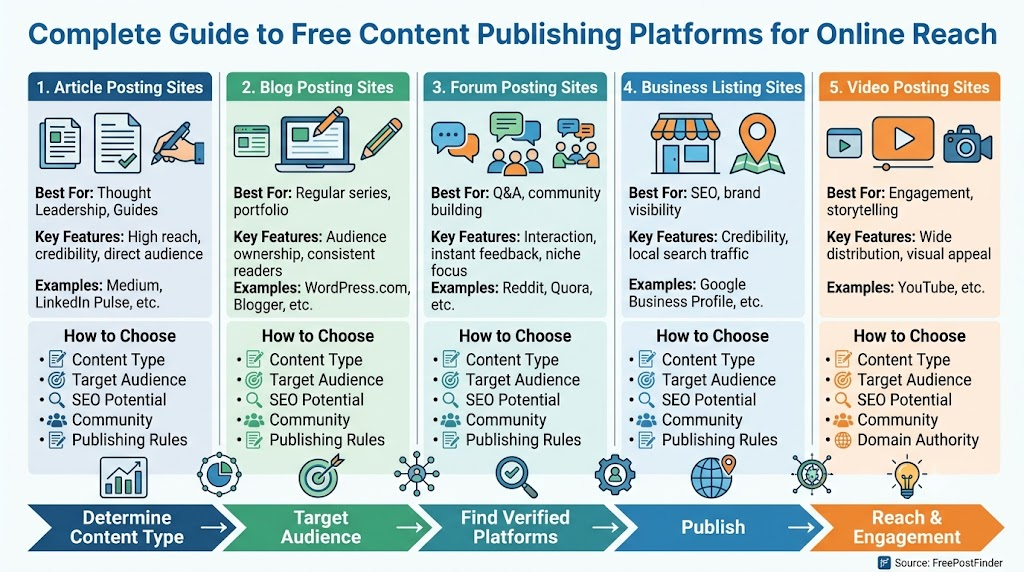
Types of Free Posting Sites
Free Article Posting Sites
Free article posting sites cater to thought leadership, structured essays, and deep-dive analysis. Portals like Medium, LinkedIn Pulse, and specialized web publications allow writers to establish expertise, build subscriber bases, and communicate detailed technical concepts to professional audiences.
Free Blog Posting Sites
Free blog posting sites provide personal and corporate creators with dedicated web subdomains or hosted environments. Platforms such as WordPress.com, Blogger, and Tumblr enable continuous narrative publishing, customizable layouts, and direct audience interaction without hosting fees.
Free Forum Posting Sites
Free forum posting sites center on peer-to-peer discussion, open Q&A, and niche community interaction. Channels like Reddit, Quora, and Discord servers allow users to answer specific questions, share technical fixes, and gather user feedback in real time.
Free Business Listing Sites
Free business listing sites store company profiles, operational details, physical locations, and customer reviews. Directories like Google Business Profile, Yelp, and regional commercial indexes bolster local search presence and verify organization legitimacy.
Free Video Posting Sites
Free video posting sites host visual storytelling, tutorial demonstrations, and short-form video clips. Platforms including YouTube, Vimeo, and video-sharing networks deliver high engagement, robust search placement, and global streaming infrastructure.
Community Publishing Platforms
Community publishing platforms combine social networking with editorial publishing. Outlets like DEV Community for developers or Substack for newsletter creators help authors cultivate dedicated follower groups through collaborative spaces.
Directory Submission Platforms
Directory submission platforms categorize websites, software products, and digital assets into searchable taxonomies. Product Hunt, AlternativeTo, and niche catalog sites connect creators directly with users seeking specific software or web tools.
Knowledge Sharing Platforms
Knowledge sharing platforms focus on educational documentation, slide presentations, research papers, and reference guides. Repositories like SlideShare, GitHub Wiki, and open documentation centers serve learners and industry professionals looking for authoritative technical data.
How to Choose the Best Platform for Your Content
Selecting the right publishing environment requires systematic evaluation rather than random submission. Matching content structure to platform dynamics ensures high readership and positive community reception.
+-----------------------------------------------------------------------+
|                       PLATFORM SELECTION STEPS                        |
+-----------------------------------------------------------------------+
| 1. Assess Content Format  --> Matches Article, Video, Code, or Forum?  |
| 2. Identify Target Group  --> B2B Professionals, Consumers, Tech?     |
| 3. Review Rules & Policy  --> Strictly Non-Spammy & Moderated?       |
| 4. Verify Domain Status   --> Indexed & Established Authority?        |
+-----------------------------------------------------------------------+
When auditing potential distribution channels, prioritize the following parameters:
- Content Alignment: Ensure the channel natively supports your media type, whether long-form markdown, high-definition video, or interactive polls.
- Audience Intent: Verify whether platform users visit to solve immediate technical problems, browse entertainment, or make B2B purchasing decisions.
- Publishing Guidelines & Moderation: Review community rules carefully. High-quality networks enforce strict anti-spam measures and content standards to protect reader trust.
- SEO & Domain Metrics: Examine indexing speed, clean URL structures, and mobile responsiveness to guarantee optimal search visibility.
FreePostFinder as a Content Publishing Platform Finder
Finding suitable, verified publishing avenues can consume hours of manual searching. FreePostFinder operates as a specialized content publishing platform finder designed to eliminate research friction for creators and growth teams.
Instead of sifting through outdated lists, users can search a curated database tracking over 200 public platforms across 23 distinct content formats. The directory organizes channels by category—including articles, video repositories, community forums, and business directories—enabling creators to quickly match specific assets with appropriate publishing channels.
Through robust filtering systems, users can evaluate platforms based on editorial rules, content support, and target audience alignment. FreePostFinder simplifies digital expansion by giving creators an organized, transparent map of the modern publishing landscape.
Best Practices for Publishing Content Online
Achieving sustained visibility on external platforms requires strategic execution and ethical distribution practices. Web standards outlined by organizations like the World Wide Web Consortium (W3C) highlight the importance of accessibility, mobile compatibility, and structured presentation.
Adhere to these core publishing standards:
- Publish 100% Original Content: Avoid direct copy-pasting across multiple channels. Customize introductions, examples, and conclusions for each audience to prevent duplicate content issues.
- Respect Community Rules: Thoroughly read submission guidelines before posting. Provide genuine value rather than submitting promotional sales pitches.
- Craft Compelling Headlines: Write clear, descriptive titles that accurately reflect article content without resort to clickbait tactics.
- Incorporate High-Quality Visuals: Enhance text readability with labeled diagrams, infographics, and original photography.
- Maintain and Update Assets: Revisit previously published pieces periodically to refresh outdated statistics, broken links, or superseded technical steps.
Common Mistakes to Avoid
Many content creators ruin their reputation on free public posting platforms by prioritizing quick promotion over audience utility. Recognizing these errors helps preserve long-term online trust.
- Multi-Site Cross-Posting: Publishing identical articles word-for-word across ten distinct sites triggers search duplicate filters and dilutes audience interest.
- Self-Promotional Spamming: Dropping product links into unrelated forum discussions alienates community members and leads to account suspension.
- Ignoring Platform Demographics: Posting consumer-oriented lifestyle content on specialized software development portals leads to immediate downvotes or post removal.
- Keyword Stuffing: Forcing awkward search terms into titles and paragraphs violates guidance from search engines and degrades readability.
- Abandoning Community Interactions: Failing to respond to comments or questions on your posts wastes key engagement opportunities.
Platform Comparison Table
| Platform Type | Best For | Typical Content | Audience | Key Benefits |
| Article Sites | Thought Leadership & Industry Analysis | Long-form Essays & Guides | Professionals & Industry Peers | Establishes authority & builds long-term reader trust |
| Blog Sites | Brand Storytelling & Continuous Series | Tutorials & Opinion Pieces | Subscribers & Regular Readers | Complete editorial control & brand customization |
| Forum Sites | Direct Engagement & Niche Q&A | Problem Solving & Feedback | Active Community Members | Instant feedback & direct peer interaction |
| Business Sites | Local SEO & Corporate Presence | Profiles, Maps & Hours | Potential Local Buyers | High local search ranking & customer confidence |
| Video Sites | Visual Demos & Product Walkthroughs | Tutorials, Short Clips & Vlogs | Visual Learners & Mass Media | Massive global reach & dynamic media engagement |
Who Can Benefit from Free Content Publishing?
Bloggers
Independent bloggers expand their subscriber base by publishing guest pieces on higher-traffic blog posting sites.
Writers
Authors and essayists showcase sample chapters, short stories, and editorial columns to build an active reader fanbase.
Businesses
Companies improve brand authority, post corporate updates, and connect with prospective clients across professional directories.
Startups
Emerging ventures build initial brand awareness, validate value propositions, and announce product releases without heavy ad spend.
Content Marketers
Marketing professionals diversify distribution channels, support campaign launches, and drive qualified referral traffic.
Developers
Software engineers share documentation, open-source repositories, and code walkthroughs on technical hubs.
Educators
Instructors and trainers publish lesson plans, study guides, and educational materials to assist global learners.
Students
Learners showcase academic research, portfolio projects, and commentary to establish early career credentials.
Agencies
Digital agencies manage client outreach, publish case studies, and secure high-visibility local directory presence.
Freelancers
Solopreneurs highlight past client work, publish service guides, and attract inbound service inquiries.
Influencers
Digital creators repurpose existing video, audio, or micro-blogging content to maintain cross-platform momentum.
Future of Digital Publishing
Digital distribution continues to evolve rapidly as consumer habits and web standards adapt. Insights from the Content Marketing Institute demonstrate that success increasingly relies on multi-channel agility and authentic community participation.
Key long-term trends shaping content publishing include:
- Rise of the Creator Economy: Independent creators are building direct relationships with audiences via decentralized newsletters, podcasts, and community spaces.
- Community-Driven Discovery: Readers increasingly prefer interactive Q&A environments, user forums, and curated newsletters over static web directories.
- Multi-Channel Workflows: Strategic creators create core master assets and adapt them into video shorts, summary threads, and article summaries across diverse platforms.
- Focus on E-E-A-T Quality: Search systems continue prioritizing content that demonstrates first-hand experience, deep expertise, authoritativeness, and genuine trustworthiness.
How FreePostFinder Helps Users Publish Smarter
Choosing where to invest your publishing time shouldn’t require tedious manual research. FreePostFinder transforms content distribution into a structured, efficient process.
By offering clear categorization across video, text, forum, and directory platforms, the platform helps users discover right-fit destinations quickly. The searchable index allows marketers and writers to analyze community policies before submitting, reducing post rejections and protecting domain reputation. With transparent verification metrics and content-type alignment, creators can execute systematic publishing workflows that deliver real audience engagement.
Frequently Asked Questions (FAQ)
What are free posting sites?
Free posting sites are online platforms that allow individuals, businesses, and creators to publish digital content without paying hosting fees. These platforms host articles, video clips, forum posts, business listings, and image galleries. They give contributors immediate access to existing reader bases and digital infrastructure, making content distribution accessible for independent writers, startups, and established organizations looking to grow their digital footprint efficiently.
Where can I post content for free?
You can publish content for free on various platforms depending on your media type. For long-form articles, platforms like Medium and LinkedIn Pulse offer built-in professional audiences. Personal blogs can be hosted on WordPress.com or Blogger. Community discussions belong on Reddit or Quora, while videos perform well on YouTube. To quickly locate verified sites matching your exact format, specialized directories simplify the discovery process.
What are free article posting sites?
Free article posting sites are hosted editorial portals designed for publishing long-form written pieces, guides, and opinion columns. These sites allow authors to format text with headings, images, and embedded media. They attract readers seeking in-depth analysis and educational material. Examples include digital magazines, industry group blogs, and open publishing portals where writers establish thought leadership without maintaining their own server infrastructure.
Which free blog posting sites are best for beginners?
WordPress.com and Blogger are two of the best free blog posting sites for beginners due to their intuitive interfaces and zero setup costs. Medium is another excellent option for writers who want to focus entirely on content creation without managing visual themes or technical plugins. These platforms handle server maintenance, security, and mobile formatting automatically, letting new creators concentrate on writing high-quality articles.
How do free business listing sites help SEO?
Free business listing sites improve local search visibility by establishing consistent Name, Address, and Phone number (NAP) data across authoritative web databases. Search engine algorithms utilize these directory references to verify business legitimacy and geographic relevance. Well-maintained profiles on platforms like Google Business Profile and local directory indexes generate trust signals, driving organic search presence and referral traffic.
What are free forum posting sites?
Free forum posting sites are discussion-driven platforms organized around specific topics, industries, or user interests. Users create threads, ask questions, and share insights within community spaces like Reddit, Quora, or niche message boards. These platforms excel at fostering direct dialogue, gathering real-time feedback, and providing targeted technical solutions to highly engaged audiences looking for reliable advice.
Which free video posting sites are worth using?
YouTube remains the top free video posting site due to its massive user base and status as the world’s second-largest search engine. Vimeo provides a professional environment ideal for portfolio showcases, while platforms like TikTok, Instagram Reels, and YouTube Shorts dominate short-form video discovery. Selecting the right channel depends on whether your goal is long-form educational tutorials or bite-sized mobile engagement.
How do I choose the right publishing platform?
Choosing the right publishing platform requires evaluating your content type, target audience, and primary goals. Determine whether your message fits an article, video, discussion thread, or directory profile. Check the platform’s community guidelines, moderation standards, and audience demographics. Opt for well-established, indexed domains that align naturally with your topic to ensure optimal audience reach and organic discoverability.
Is FreePostFinder suitable for businesses and creators?
Yes, FreePostFinder is designed for businesses, marketers, independent writers, developers, and creators. Its searchable directory categorizes platforms by media format, use case, and community guidelines. Startups looking for directory listings, bloggers seeking article outlets, or video creators seeking new sharing channels can use the platform finder to quickly pinpoint active, relevant publishing avenues.
How can I avoid content rejection on publishing platforms?
To avoid post rejection, thoroughly review and adhere to each platform’s community guidelines before submitting content. Always publish original, well-structured material rather than copy-pasting identical articles across multiple websites. Avoid aggressive sales pitches, affiliate spam, or deceptive headlines. Focus on delivering clear value, answering reader questions, and adhering to formatting standards required by platform moderators.
Conclusion
Building a resilient online presence demands more than producing great work—it requires publishing content where active audiences can discover it. Leveraging free content publishing platforms offers a proven, cost-effective method to broaden your reach, establish brand authority, and support organic growth. However, success relies on strategic channel selection, respecting community guidelines, and delivering tailored value across every medium. By prioritizing original writing, understanding platform rules, and staying away from low-quality spam tactics, you build lasting digital authority. Tools designed to simplify channel research—such as organized directories and category recommender engines—help streamline distribution so you spend less time searching and more time connecting with readers. Approach digital distribution strategically, choose your channels carefully, and share your message with purpose.
