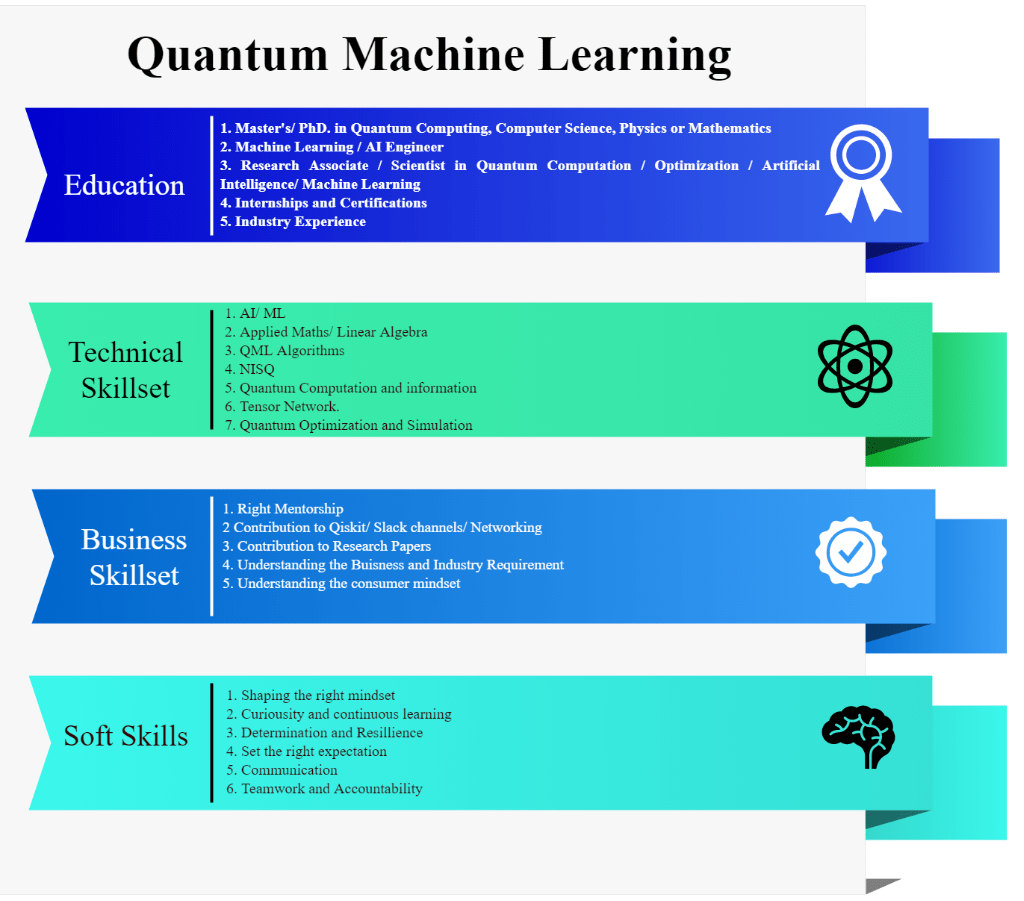
Here’s a step-by-step, in-depth guide to learn Quantum Computing, designed for both beginners and those with a background in computer science, mathematics, or physics. It includes learning paths, tools, resources, and practical implementation strategies.
🧠 Ultimate Step-by-Step Guide to Learn Quantum Computing (2025 Edition)
📌 Who Is This Guide For?
- Computer science engineers exploring quantum algorithms
- Physicists transitioning into quantum programming
- Students and researchers entering the quantum computing field
- Professionals interested in the future of computing and cryptography
🧩 Table of Contents
- What is Quantum Computing?
- Prerequisites You Must Know First
- Step-by-Step Learning Roadmap
- Step 1: Learn Quantum Mechanics Basics
- Step 2: Learn Linear Algebra & Probability
- Step 3: Classical vs Quantum Computing
- Step 4: Learn Quantum Gates & Circuits
- Step 5: Learn Quantum Programming Languages
- Step 6: Simulate & Run Quantum Code
- Step 7: Dive Into Algorithms (QFT, Grover, Shor)
- Step 8: Real-World Applications
- Step 9: Keep Learning via Community & Research
- Top Platforms, Courses, and Books
- Practical Projects to Solidify Knowledge
- Career Opportunities & Certifications
🧭 Step-by-Step Learning Roadmap
✅ Step 1: Understand What Quantum Computing Is
Goal: Grasp the fundamental difference between classical and quantum computing.
Key Concepts:
- Qubit vs classical bit
- Superposition
- Entanglement
- Measurement
- Interference
Resources:
- YouTube: 3Blue1Brown “But what is a Quantum Computer?”
- Book: Quantum Computing for the Very Curious (Andy Matuschak & Michael Nielsen)
- Website: quantum.country
✅ Step 2: Learn the Prerequisite Math & Physics
Goal: Build a solid foundation in the mathematical language of quantum mechanics.
A. Linear Algebra
- Vectors, Matrices, Inner products
- Eigenvalues, Eigenvectors
- Tensor Products
- Unitary Matrices
📚 Resource: Khan Academy – Linear Algebra Series
📘 Book: Gilbert Strang’s Introduction to Linear Algebra
B. Probability Theory
- Probability distributions
- Expectation values
- Conditional probability
📚 Resource: MIT OCW – Intro to Probability
C. Basic Quantum Mechanics (Physics)
- Wave-particle duality
- Schrödinger Equation (basic level)
- Observables and measurements
📘 Book: David J. Griffiths – Introduction to Quantum Mechanics (simplified edition)
✅ Step 3: Classical vs Quantum Computing
Goal: Learn how classical gates (AND, OR, NOT) differ from quantum gates.
| Classical Computing | Quantum Computing |
|---|---|
| Uses bits (0/1) | Uses qubits (0, 1, superposition) |
| Irreversible logic | Reversible logic |
| Deterministic | Probabilistic outcomes |
🎓 Course: IBM Qiskit Introduction Course
✅ Step 4: Learn Quantum Gates & Circuits
Goal: Learn how quantum information is manipulated using gates and how circuits are formed.
Quantum Gates:
- Pauli-X, Y, Z
- Hadamard (H)
- CNOT
- Phase, T-gate
- Swap gate
- Measurement gate
Quantum Circuits:
- Qubits flow left to right
- Gates applied in sequence
- Measured at end
🧪 Try: IBM Quantum Composer (drag & drop visual simulator)
🎓 Learn: Qiskit Textbook: Quantum Gates and Circuits
✅ Step 5: Learn Quantum Programming Languages
Goal: Write actual quantum code.
Top Languages:
- Qiskit (Python-based, by IBM)
- Cirq (Google)
- PennyLane (Xanadu, for hybrid quantum/ML)
- Q# (Microsoft)
# Simple Qiskit Example
from qiskit import QuantumCircuit, Aer, execute

qc = QuantumCircuit(1, 1)
qc.h(0)
qc.measure(0, 0)
result = execute(qc, Aer.get_backend('qasm_simulator')).result()
print(result.get_counts())
📘 Official Docs:
✅ Step 6: Run Your Code on Real Quantum Computers
Goal: Deploy quantum programs on actual quantum hardware.
Platforms:
- IBM Quantum Lab
- Amazon Braket
- Microsoft Azure Quantum
- [Google Cirq + Sycamore backend (limited access)]
🛠 Use cases:
- Experiment with quantum noise
- Test small algorithms (due to decoherence limits)
✅ Step 7: Learn Quantum Algorithms
Goal: Understand how real quantum advantage is achieved.
Essential Algorithms:
- Deutsch–Jozsa Algorithm
- Grover’s Search Algorithm (search in √N time)
- Shor’s Algorithm (prime factorization in polynomial time)
- Quantum Fourier Transform
- Quantum Phase Estimation
- Variational Quantum Eigensolver (VQE)
- Quantum Approximate Optimization Algorithm (QAOA)
📘 Resource: Qiskit Textbook + IBM’s YouTube series
🧠 Optional Advanced Topic: Quantum Machine Learning (QML) with PennyLane
✅ Step 8: Study Real-World Applications
Goal: See where quantum computing is heading in industry.
| Domain | Application |
|---|---|
| Cryptography | Breaking RSA, Quantum Key Distribution |
| Chemistry | Molecule simulation (e.g., FeMoCo) |
| Finance | Portfolio optimization, risk analysis |
| Machine Learning | Quantum SVMs, QNNs |
| Logistics | Route optimization |
📚 Read: IBM Use Cases in Quantum Computing
🔬 Explore: Qiskit Chemistry
✅ Step 9: Join Quantum Communities & Read Research
Goal: Stay current and collaborate.
Communities:
- Qiskit Slack
- Quantum Computing StackExchange
- r/QuantumComputing
Reading Sources:
- arXiv.org – Quantum Physics section
- Nature Quantum Information Journal
- IBM Research Blog
- Xanadu & Rigetti Blogs
📚 Top Courses, Books & Certifications
🎓 Courses:
| Platform | Course |
|---|---|
| IBM Qiskit | Qiskit Textbook |
| MITx (edX) | Quantum Computing Fundamentals |
| Coursera | Introduction to Quantum Computing by St. Petersburg University |
| Brilliant.org | Quantum Computing Interactive Series |
📖 Books:
- Quantum Computation and Quantum Information – Nielsen & Chuang
- Dancing with Qubits – Robert S. Sutor
- Quantum Computing for Everyone – Chris Bernhardt
🏅 Certifications (Optional but Good):
- IBM Certified Associate Developer – Quantum Computation
- Microsoft Quantum Development Kit Certifications
- QWorld QBronze Series
🛠 Project Ideas to Practice
- Build a Quantum Random Number Generator
- Simulate a Quantum Teleportation Circuit
- Implement Grover’s Algorithm on 4 qubits
- Create a Quantum Tic-Tac-Toe
- Build a Quantum ML classifier with PennyLane
Use GitHub for version control and documentation.
💼 Career Scope & Job Opportunities
| Role | Description |
|---|---|
| Quantum Software Engineer | Builds apps on quantum SDKs |
| Quantum Physicist | Theoretical R&D, hardware development |
| Research Scientist | Algorithm and quantum information theory |
| Cloud Quantum Architect | Develops hybrid systems |
| Quantum AI Specialist | Combines ML with quantum models |
Top Employers: IBM, Microsoft, Google, Amazon, Intel, Xanadu, D-Wave, Zapata, Rigetti
✅ Final Tips
- Start small but be consistent (30 minutes daily is enough!)
- Focus more on concept visualization than memorization
- Use simulators before jumping into hardware
- Engage in hackathons and Kaggle-style quantum competitions
- Publish your learnings on GitHub or a blog to build a portfolio
