Introduction
As digital operations expand, individuals and organizations manage hundreds—or even thousands—of web addresses across social media, marketing campaigns, blogs, and internal documentation. Without a structured framework, web addresses become scattered across spreadsheet rows, private chat logs, and browser bookmarks. This disorganization creates operational bottlenecks, wastes team bandwidth, and leads to undetected broken links that damage brand credibility and search rankings. Implementing a centralized URL management tool solves these challenges by providing a unified environment to store, categorize, monitor, and share web destinations. Instead of hunting through messy records or risking broken customer touchpoints, teams gain full visibility over their online presence. In this comprehensive guide, you will learn how modern link management platforms operate, why automated health monitoring protects SEO, how creators and marketers build dynamic portfolios, and how using URLsNow simplifies your entire digital footprint.
What Is a URL Management Tool?
Definition
A URL management tool is a centralized software platform engineered to organize, monitor, edit, categorize, and analyze web links from a single dashboard. Unlike simple browser bookmarks that remain isolated on individual devices, a cloud-based link management system provides team-wide accessibility and continuous link health tracking.
How URL Management Works
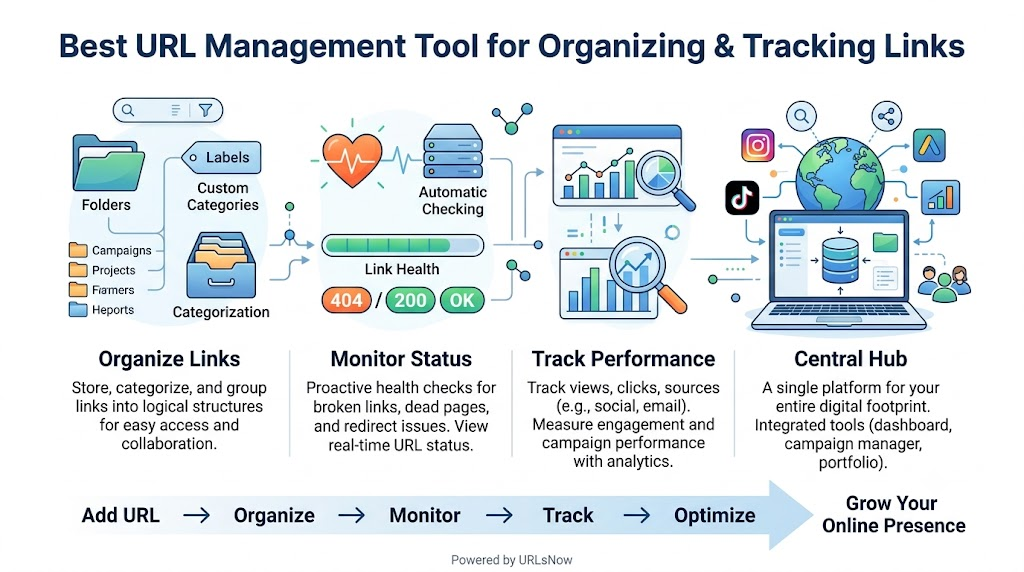
Link management tools index web destinations into structured collections. Users add URLs into defined folders, assign searchable metadata tags, and set up automated health checks. The platform continuously pings target destinations to ensure pages remain active, returning status updates and alerting administrators whenever dead pages or redirect loops occur.
Why Link Organization Matters
When web addresses are poorly tracked, organizations suffer from link decay, lost campaign data, and degraded user trust. Structured link organization ensures that every digital asset—from landing pages to whitepapers—remains easily retrievable, verifiable, and ready for distribution.
Benefits of Centralized URL Management
Adopting a unified link management platform delivers significant organizational advantages:
- Centralized Asset Hub: Eliminates scattered spreadsheets by maintaining a single source of truth for all external and internal web addresses.
- Proactive Maintenance: Identifies broken pages before customers or search engine crawlers encounter them.
- Streamlined Collaboration: Allows teams to share curated link folders with defined permission levels.
- Enhanced Visibility: Provides insights into link status, campaign performance, and asset structure.
Why Link Management Is Important
Better Organization
Managing links systematically transforms digital clutter into structured repositories. Categorizing links by project, department, or content type allows team members to access vital web resources instantly.
Improved Productivity
Knowledge workers waste significant time searching for lost documents, promotional pages, and staging URLs. A centralized dashboard reduces search time, accelerating daily marketing, development, and administrative workflows.
Easier Collaboration
When launching cross-departmental initiatives, sales, marketing, and support teams require quick access to identical landing pages. Shared link collections eliminate communication friction and prevent teams from circulating outdated URLs.
Better User Experience
Navigating to a dead page frustrates users and damages trust. Industry guidelines from the Mozilla Developer Network (MDN) emphasize that maintaining valid HTTP response codes (such as 200 OK) is fundamental to web usability. Reliable link management ensures users always reach active, relevant destinations.
Stronger SEO Performance
Search engines like Google prioritize sites that deliver smooth user experiences. According to documentation from Google Search Central, excessive broken links, broken redirects, and dead internal pointers negatively affect crawling efficiency and organic rankings.
Consistent Brand Presence
Outdated promotional links on social profiles or partner sites create brand inconsistencies. Centralized URL management allows organizations to update destination targets rapidly, ensuring consistent messaging across all channels.
Essential Features of a Modern Link Management Platform
Modern link management platforms offer robust feature sets designed for scalability, security, and ease of use.
+-------------------------------------------------------------------------+
|                  CORE LINK MANAGEMENT PLATFORM MODULES                 |
+-------------------------------------------------------------------------+
|  1. Organization Hub    --> Folders, Tagging, & Custom Collections      |
|  2. Health & Auditing   --> Automatic Broken Link & Status Checks       |
|  3. Campaign Manager    --> UTM Tracking, Shortening, & Analytics       |
|  4. Sharing & Bio-Links --> Dynamic Portfolios & Social Bio Landing     |
+-------------------------------------------------------------------------+
- URL Organization: Systematic categorization keeps digital assets sorted by campaign, brand, or project phase.
- Folder & Collection Management: Nesting folders allows complex organizations to structure links hierarchically.
- Tagging & Categorization: Custom multi-tagging systems enable rapid filtering across large database volumes.
- Search & Filtering: Advanced keyword search and status filters help administrators locate specific URLs immediately.
- Link Sharing: Secure public or private link-sharing options simplify external distribution to clients and stakeholders.
- Team Collaboration: Multi-user support lets team members co-manage collections, add notes, and maintain accuracy.
- Access Management: Role-based permissions protect sensitive staging or administrative URLs from unauthorized edits.
By combining these features, a versatile URL organizer tool streamlines how teams interact with web resources.
Automatic Broken Link Monitoring
Why Broken Links Matter
Web pages change, domains expire, and page paths get updated during site redesigns. These factors cause “link rot.” Without automated tracking, dead links linger unnoticed across public channels, turning away prospective customers.
SEO Impact
Search engine spiders follow links to discover and index content. When crawlers repeatedly encounter 404 error pages, crawl budgets are wasted, which can negatively affect overall indexing performance. SEO authorities such as Ahrefs and Semrush consistently highlight broken link remediation as a top priority for technical site health.
User Experience
A user clicking a broken link experiences immediate friction, often abandoning the site entirely. Maintaining clean, functional link paths preserves user trust and improves conversion rates.
Website Maintenance & Link Auditing
Manual link auditing requires checking hundreds of addresses line by line—an inefficient, error-prone task. An automated URL health monitoring tool continuously scans destination URLs in the background, executing automatic broken link monitoring and notifying site owners the moment a destination fails.
Campaign Link Management for Marketers
Marketing teams run multi-channel campaigns across social media, paid search, email newsletters, and influencer partnerships. Managing these touchpoints requires precision and agility.
A dedicated campaign link management tool simplifies campaign oversight:
- Landing Pages: Group campaign-specific landing pages into dedicated folders to audit status before ad spend begins.
- Social Media Campaigns: Track custom vanity links across different social channels to maintain clean profile presentations.
- Email Campaigns: Ensure newsletter resource links remain active long after broadcast dates.
- Affiliate Marketing: Organize affiliate partner links to confirm destination availability and preserve revenue streams.
- Content Promotion: Categorize syndicated content links to monitor external distribution performance over time.
- Marketing Analytics: Pair organized links with UTM parameters to feed clean attribution data into platform analytics dashboards, such as HubSpot.
Link Portfolio Management for Professionals
Professionals across industries require simple, elegant methods to showcase their online work. Utilizing link portfolio management allows individuals to curate personal digital showcases without writing custom code.
+-------------------------------------------------------------------------+
|                     PROFESSIONAL LINK PORTFOLIO MAP                     |
+-------------------------------------------------------------------------+
|  [ Work Examples ]  --> Case Studies, Published Articles, GitHub Code   |
|  [ Media & Press ]  --> Video Interviews, Podcast Guests, Presentations  |
|  [ Credentials ]   --> Industry Certifications, Diplomas, Awards       |
|  [ Social & Work ]  --> LinkedIn, Corporate Profiles, Business Site    |
+-------------------------------------------------------------------------+
Organize your digital footprint effectively across key professional categories:
- Articles & Publications: Group written work, guest blogs, and research papers into searchable showcases.
- Websites & Projects: Display client builds, software deployments, or personal side projects.
- Videos & Media Appearances: Curate conference recordings, webinars, and podcast interviews.
- Products & Case Studies: Highlight product launches and measurable business outcome summaries.
- Certifications & Resume Links: Keep professional credentials updated for recruiters and prospective clients.
Free Link in Bio Tool for Creators
Social media platforms like Instagram and TikTok limit users to a single profile link. Creators rely on a free link in bio tool to transform that single link into a gateway for their complete content ecosystem.
+-------------------------------------------------------------------------+
|                       CREATOR LINK IN BIO HUB                           |
+-------------------------------------------------------------------------+
|                              [ CREATOR BIO ]                            |
|                                     |                                   |
|   +-------------------+-------------------+-------------------+         |
|   |                   |                   |                   |         |
|   v                   v                   v                   v         |
| [ Latest Video ]  [ Store / Merch ]   [ Newsletter ]    [ Podcast ]     |
+-------------------------------------------------------------------------+
- Personal Branding: Customize mobile landing pages with brand colors, bio descriptions, and custom headers.
- Influencer & Creator Portfolios: Feature sponsored content, brand partnerships, and affiliate discounts in one accessible location.
- Business Profiles: Direct social traffic toward active sales funnels, booking calendars, or customer support pages.
Centralizing social traffic through a mobile-optimized bio link improves discoverability, driving followers directly toward key digital assets.
Content Link Management for Bloggers & Publishers
Publishers and independent bloggers generate vast libraries of internal and external resources. Over time, managing these references becomes increasingly complex.
Deploying a content link management tool assists publishers with:
- Managing Blog URLs: Keep internal link archives organized to simplify cross-referencing within new articles.
- Organizing Reference Materials: Store research sources, data studies, and citations systematically during draft phases.
- Updating Evergreen Content: Quickly locate and replace outdated external references across legacy blog posts to maintain content authority.
- Content Auditing: Audit outbound recommendations regularly to avoid linking to demoted or expired domains.
Digital Footprint Management
Every individual and brand leaves behind an expanding digital trail across social channels, directory listings, guest articles, and web apps. Managing this presence requires active oversight.
Using a specialized digital footprint management tool allows users to:
- Audit Online Identity: Maintain a comprehensive registry of every owned web property, social handle, and business profile.
- Protect Business Reputation: Ensure public links point to secure (HTTPS) and up-to-date brand pages.
- Organize Corporate Assets: Track domain ownership details, staging links, and external partner references from one dashboard.
- Sustain Long-Term Visibility: Prevent dead links from severing access to valuable legacy content.
URLsNow for Different User Types
Bloggers
Bloggers organize reference material, track internal structures, and verify outbound citations to preserve search engine credibility.
Content Creators
Creators build mobile-ready bio links, curate media portfolios, and share consolidated resource lists with their communities.
Digital Marketers
Marketers streamline multi-channel campaign links, manage affiliate paths, and monitor landing page health before ad launches.
Businesses
Enterprises maintain accurate brand directories, organize internal resource links, and protect customer touchpoints.
Agencies
Digital agencies manage client link portfolios, run structural audits, and present organized deliverables in shared client folders.
Developers
Engineers track API documentation links, manage staging environment URLs, and archive technical reference material securely.
Freelancers
Solopreneurs showcase past work via polished link portfolios and send organized project folders to prospective clients.
Students
Learners organize academic research sources, manage group project links, and curate digital resumes for future employers.
Feature Comparison Matrix
| Feature / Capability | Manual Spreadsheets | Basic Browser Bookmarks | URLsNow Platform |
| Centralized Cloud Access | Partial | No | Yes |
| Automatic Broken Link Monitoring | No | No | Yes |
| Campaign & Folder Categorization | Tedious | Basic | Advanced |
| Link in Bio Generator | No | No | Built-in |
| Multi-User Team Collaboration | Complex | No | Seamless |
| Digital Footprint Tracking | Manual | No | Automated |
Best Practices for Managing URLs Effectively
Adopting structured habits prevents digital sprawl and ensures high operational efficiency:
- Organize Links by Category: Group links into intuitive folder hierarchies based on department, campaign, or asset type.
- Monitor Broken Links Regularly: Enable automated background checks to catch 404 errors as soon as they occur.
- Use Meaningful Naming Conventions: Replace raw, cryptic web strings with clear, descriptive titles and custom tags.
- Review Campaigns Periodically: Deactivate or archive promotional links once campaigns conclude to prevent misdirected traffic.
- Centralize Important Assets: Store critical operational links—such as brand kits and public forms—in shared team folders.
- Audit Digital Assets Annually: Review owned web profiles across external directories to ensure operational data remains accurate.
Common URL Management Mistakes
Avoid these frequent operational pitfalls:
- Relying on Fragmented Spreadsheets: Storing URLs across disconnected personal files creates version conflicts and data loss.
- Ignoring Link Decay: Failing to monitor outbound links hurts user experience and negatively impacts site SEO.
- Overlooking Mobile Optimization: Sharing raw links on social channels rather than responsive bio pages reduces click-through rates.
- Mixing Staging and Production URLs: Circulating internal development links publicly confuses users and exposes incomplete features.
- Neglecting Link Audits: Leaving dead links on high-traffic landing pages leads to lost sales and diminished trust.
The Future of URL Management
As web architectures evolve, link management platforms continue to advance beyond static bookmarking:
- AI-Assisted Link Organization: Intelligent algorithms will automatically tag, summarize, and categorize imported URLs based on page content.
- Predictive Health Monitoring: Systems will anticipate link failures by tracking domain expiration schedules and DNS changes.
- Integrated Asset Ecosystems: Centralized link hubs will connect directly with CMS platforms, analytics suites, and social scheduling tools to automate content distribution.
- Decentralized Footprint Controls: Brands will utilize unified dashboards to manage identity footprints across traditional websites and emerging web channels.
How URLsNow Helps Users Stay Organized
Managing digital resources shouldn’t feel chaotic. URLsNow transforms scattered web addresses into an organized, actionable asset hub.
Through its intuitive central dashboard, users can set up structured collections, launch dynamic bio-link pages, and build professional link portfolios in minutes. Integrated link health tracking monitors URL status automatically, alerting users to broken links before they disrupt campaigns or harm SEO. By centralizing link management, campaign tracking, and digital footprint oversight, URLsNow gives individuals and teams complete control over their online presence.
Frequently Asked Questions (FAQ)
What is a URL management tool?
A URL management tool is a centralized web platform that helps individuals and businesses organize, store, categorize, monitor, and share web links from a single dashboard. Unlike local browser bookmarks, these tools provide cloud access, folder organization, tagging systems, and automated status monitoring to ensure web addresses remain accessible, functional, and organized.
Why is link management important?
Link management is important because unorganized links lead to lost productivity, broken user pathways, and degraded SEO performance. Centralizing link storage allows teams to find resources quickly, collaborate efficiently, ensure continuous URL availability, and project a consistent, professional brand presence across all digital channels.
How does broken link monitoring work?
Broken link monitoring automatically tests stored URLs by sending background HTTP requests to target servers. If a destination returns a 404 error, redirect loop, or server timeout, the system alerts the user. This automated process saves time compared to manual auditing and helps maintain site health.
What is URL health monitoring?
URL health monitoring tracks the operational status, response speed, and accessibility of stored web addresses over time. It ensures that critical landing pages, affiliate links, and promotional destinations remain active, helping businesses protect revenue streams and maintain positive search engine indexing.
What is a link portfolio?
A link portfolio is a curated digital showcase that organizes an individual’s or company’s online work into categorized collections. Professionals use link portfolios to present articles, case studies, project builds, media appearances, and certifications cleanly to clients, recruiters, and prospective business partners.
How does a link in bio tool help creators?
A link in bio tool creates a single, mobile-optimized landing page containing links to a creator’s key content destinations. Since platforms like Instagram limit profile link placements, a bio link page enables creators to drive followers to store items, new videos, newsletter signups, and external social channels simultaneously.
Why should businesses organize URLs?
Businesses manage vast libraries of digital assets, including promotional pages, internal docs, and marketing campaigns. Organizing URLs in a central platform prevents link duplication, reduces time spent searching for assets, ensures consistent team sharing, and protects brand reputation by eliminating public-facing broken links.
Can URL management improve SEO?
Yes, systematic URL management indirectly supports SEO by identifying broken links, chain redirects, and expired domains before search engine crawlers encounter them. Maintaining clean internal and external linking structures preserves crawl budget efficiency, improves user retention, and supports domain authority.
Who should use URLsNow?
URLsNow is built for bloggers, content creators, digital marketers, agencies, developers, freelancers, and businesses. Anyone managing multiple web links, running digital campaigns, showcasing work portfolios, or overseeing brand footprints benefits from its centralized organization, health monitoring, and link-sharing features.
How often should links be audited?
High-traffic marketing links, landing pages, and affiliate destinations should be monitored continuously using automated health tracking. Broader content archives, portfolio collections, and digital footprint profiles should undergo comprehensive manual reviews quarterly to ensure ongoing relevance and accuracy.
Conclusion
As online ecosystems become more complex, maintaining control over your web presence requires structured management. Relying on disconnected spreadsheets and browser bookmarks leads to link decay, lost productivity, and broken user journeys that hurt brand authority. Integrating a robust URL management tool provides the structure needed to organize digital assets, monitor link health proactively, and execute smooth marketing campaigns. By taking control of your link organization, implementing automated monitoring, and managing your digital footprint from a single hub, you safeguard your online reputation and streamline daily workflows. Take time to audit your current link inventory, remove dead destinations, and consolidate your resources into an accessible framework. A well-organized digital footprint serves as a strong foundation for sustainable online growth.
